



You bought vacuum bags to save space without considering important features. Then you ended up ruining your favorite sweater instead.
That stings.
The wrinkles that would not come out. The wool that lost its shape. The jacket that refused to puff up again.
Many people complain about this.
Why?
Because they chose the wrong vacuum storage bag.
The good news? Our solution helps many to fight against this common issue.
This guide cuts through the BS and tells you exactly which bags actually protect your clothes in 2026 and which ones will leave you frustrated.
Why Do Some Vacuum Storage Bags Damage Clothes
Vacuum storage removes air from around your clothes. That air removal creates pressure that flattens fibers and compresses fabrics. The problem is that not all fabrics handle this pressure well.
Creases
People mostly complain about wrinkles. Fabrics experience deep folds when you compress clothes tightly. These creases often resist ironing because of crushed fibers rather than simply being folded.
Shape Loss
Loss of shape and loft affects natural fibers especially hard. Wool sweaters flatten and lose their insulating properties under long term compression. Down jackets often stop fully recovering their original puffiness after extended vacuum storage.
The fibers get pressed together and cannot spring back to their normal structure if you wrongly pack them. Follow this guide to know how to pack down jackets properly without damaging them. If your down jackets refuse to regain their loft, read me.
Moisture
Dampness trapped in your bag is a major cause of the mildew growth problem. Your clothes may feel dry to you, but hold enough moisture to create condensation in an airtight bag.
The moisture starts appearing in the form of droplets after temperature changes. They lead to mold growth. The smell clings permanently to the fabric after mildew development.
Can Vacuum Storage Actually Protect Your Clothes
Vacuum storage offers real benefits when used correctly.
- Airtight seals block dust, dirt, and insects
- Moths cannot get through the plastic barrier
- Musty odors stay outside the sealed bag
- Clean and dry clothes stay fresh for months
The protection depends entirely on your preparation and the quality of bags you choose. Clean clothes with zero moisture stored in durable bags with proper seals work great. The same bags filled with damp clothes or delicate fabrics will cause damage every time.
How to Choose the Right Vacuum Storage Bag
Having the right bag in your closet simply means you have half won in saving your clothes from being ruined. Features that matter and that you should consider are here.
Material Quality and Thickness
Thin plastic damages easily. The thick plastic resists tearing and puncture damage. Sharp zippers, buttons or other hardware can poke through thin bags and break the seal. Look for bags made from PA+PE multi layer materials that provide both strength and flexibility. Your bags with thicker plastic also create a better moisture barrier to avoid dampness ruining your clothes.
Airtight Seal Design
The seal determines whether the bag maintains compression. Double zipper closures and triple seal valves prevent air from seeping back in. The bag loses its seal when air leaks back, and your clothes stop being protected. A weak seal also creates uneven pressure that stresses fabrics in different ways.
Bag Thickness and Valve Design
Consistent compression depends on even air removal. Thicker bags apply pressure more uniformly across the contents. The valve design matters too. One way valves let air out but keep it from coming back in. Electric pumps provide more consistent suction than manual pumps and leave fewer air pockets behind.
Size Selection
The right size bag prevents overstuffing and uneven compression. Oversized bags let clothes shift around and compress poorly. You may experience overstuffing with undersized bags. They put too much pressure on seams. Shirts and underwear need small bags, and medium ones suit sweaters and light jackets. Large bags handle coats and bedding.
Reusability
Quality bags should support multiple uses. Signs that a bag needs replacement include torn plastic, weak zipper action, air leakage and damaged valves. Reusable bags offer better value and reduce waste compared to single-use options.
Common Storage Mistakes That Ruin Clothes
Even good bags fail when you make these mistakes.
- Storing dirty clothes leads to set-in stains and trapped odors. Sweat, body oils and food spills become permanent during compression. Washing and completely drying fabrics is a fine practice before sealing them.
- Overfilling bags starts putting pressure on the compression. That mostly affects seams and weakens the seal. Pressure in the center damages the clothes. The edge ones remain loose. Each bag has a recommended capacity. Following overstuffing also makes folding and organizing harder.
- Picking a hot or humid place for bag storage causes plastic to weaken and adhesives to fail. Heat easily causes faster bag tearing. Humidity condenses to form droplets in your storage bag. A better decision is to avoid attics, garages and basements without climate control.
- Leaving clothes sealed too long causes permanent damage to many fabrics. Six months is the safe limit for most clothes. Twelve months' work for sturdy items, but risks damage to delicate materials. Opening bags periodically lets fabrics breathe and recover their shape.
- Mixing different fabric types creates uneven pressure points. Heavy jeans compress differently from lightweight shirts. This uneven pressure can stress seams and damage delicate items. Sort clothes by fabric type before packing.
Follow the Best Practices for Vacuum Storage
The following list of practices helps you safely store your clothes during vacuum storage.
Preparation
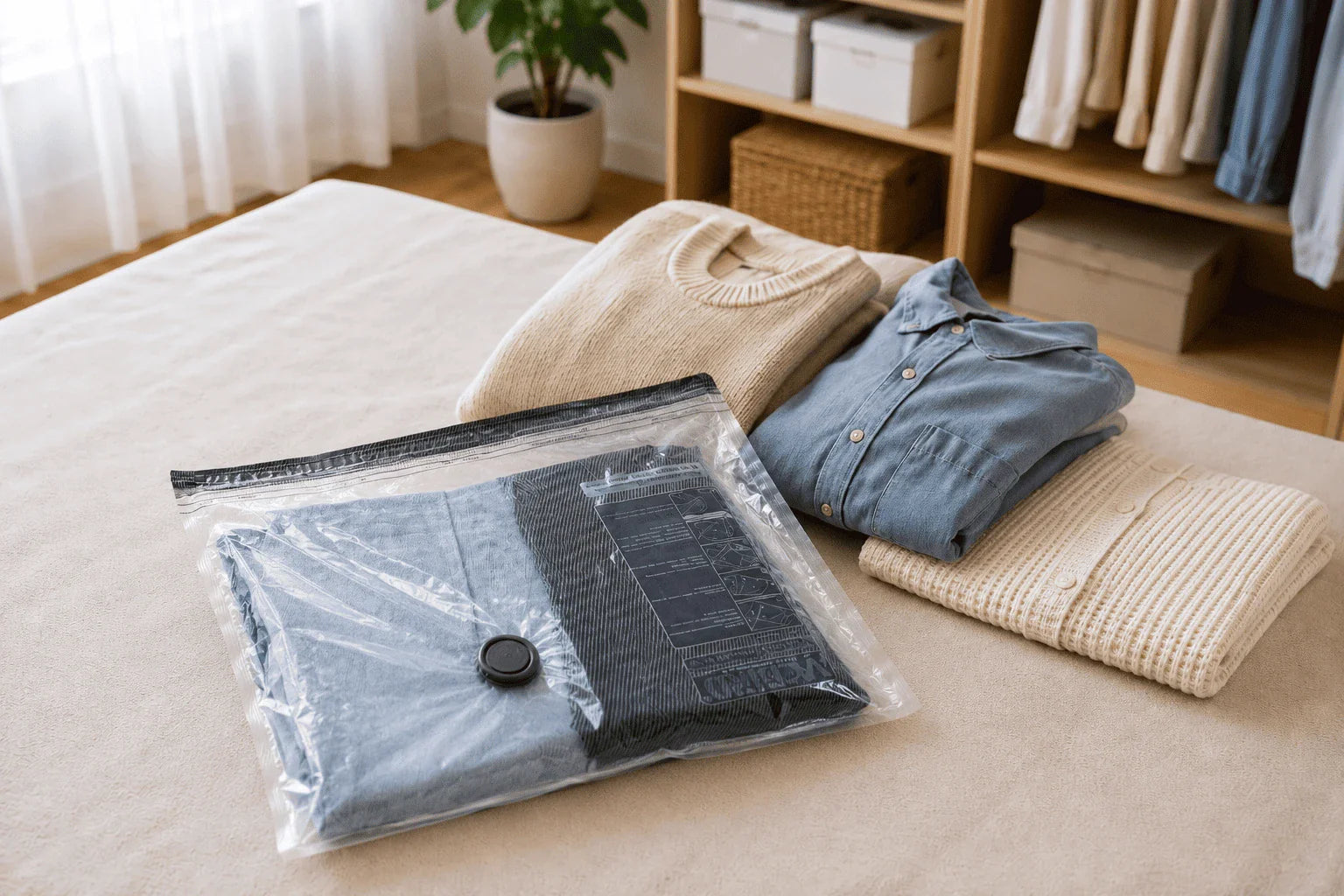
Use mild detergent to wash your clothes and completely skip fabric softeners that leave residue. You need to dry everything completely. Small amounts of moisture will surprise you with mold. Fold or roll clothes neatly. I prefer rolling for its less creasing-creating nature. Let clothes rest after drying before sealing them.
Packing Technique
Leave space near the valve for even air removal. Stack similar items together for consistent compression. Take your heavier items and put them at the bottom of your bag. Look after those buttons, zippers and sharp objects to never come in contact with your bag's surface to prevent punctures.
Storage Conditions
Find a cool and dry place to store your bags. Stop putting them in direct sunlight and extreme temperature changes. Silica gel packets are good to put inside bags to absorb any residual moisture, and check bags occasionally for signs of air leakage.
How Long Clothes Can Safely Stay Sealed
Most clothes stay safe for six months in vacuum storage. Sturdy items like denim and heavy cotton can handle up to twelve months. Silk and wool are delicate fabrics and should stay sealed for a few weeks at most. Open bags every few months to let fabrics breathe.
Why Vacbird Turbo X8 Meets These Storage Criteria
The Vacbird Turbo X8 system addresses every concern we have discussed.
PA+PE Material
The bags use thick and durable PA+PE material. It resists tears and protects clothes from dust, moisture and pests. Rounded corners reduce stress on the bag material and prevent the sharp edge failures that cause leaks in other bags.
Quality Seal
The airtight double-zip seal maintains consistent pressure without air seeping back in. This means clothes stay protected and fabrics do not experience uneven compression.
Size Availability
The system offers small and medium bags for normal clothing items. The large bags allow you to match the size to what you store without overstuffing. The bags fit standard suitcase dimensions and work well for both travel and home storage.
Turbo X8 Electric Pump
The one-button electric pump provides even and consistent compression. The suction removes air uniformly rather than creating harsh pressure points that stress fabrics. The pump runs on USB-C charging. Strong battery life works for over 100 compressions per charge. The compact size fits in your palm. The cordless design makes repacking faster because you do not need to search for a power adapter.
Real travelers have noticed the difference. One customer said the tiny pump is easy to pack and powerful, and it reduced all clothing space by half to a third. Another reviewer mentioned the wireless design gives freedom and the battery lasts through multiple uses before needing to be recharged. A traveler who tested the system noted that three days of winter clothes fit into a carry-on with plenty of room to spare.
FAQs
Do vacuum storage bags ruin clothes?
Vacuum seal bags themselves don’t ruin your clothes; the circumstances do. You pack incorrectly and let moisture sit inside the bags. Improper sealing of low quality plastic bags also plays a negative part in it.
Can vacuum storage bags prevent mildew?
Absolutely. Dry the items before sealing. Then place your bags in a cool and dry spot. Don't allow moisture from outside to enter the bag; even a small amount of moisture that comes in contact with your items can ruin them badly.
Are electric pump bags better than manual pumps?
Electric pumps provide more consistent compression. It reduces the risk of uneven pressure damaging fabrics. They are faster and more efficient in working and require less effort than manual pumping.
Conclusion
A vacuum storage bag itself is beneficial by helping you save space and protect your clothes. The real issue comes when you compromise on its quality, either by ignoring considerable aspects or by unintentionally picking the wrong one.
You waste money, and so do your clothes. You will find a good vacuum storage bag if you carefully buy one, like the Turbo X8, and you will save your clothes from getting ruined if you store them correctly in quality bags.
Follow my shared guidelines to keep your clothes safe and your storage organized.

Leave a comment
This site is protected by hCaptcha and the hCaptcha Privacy Policy and Terms of Service apply.