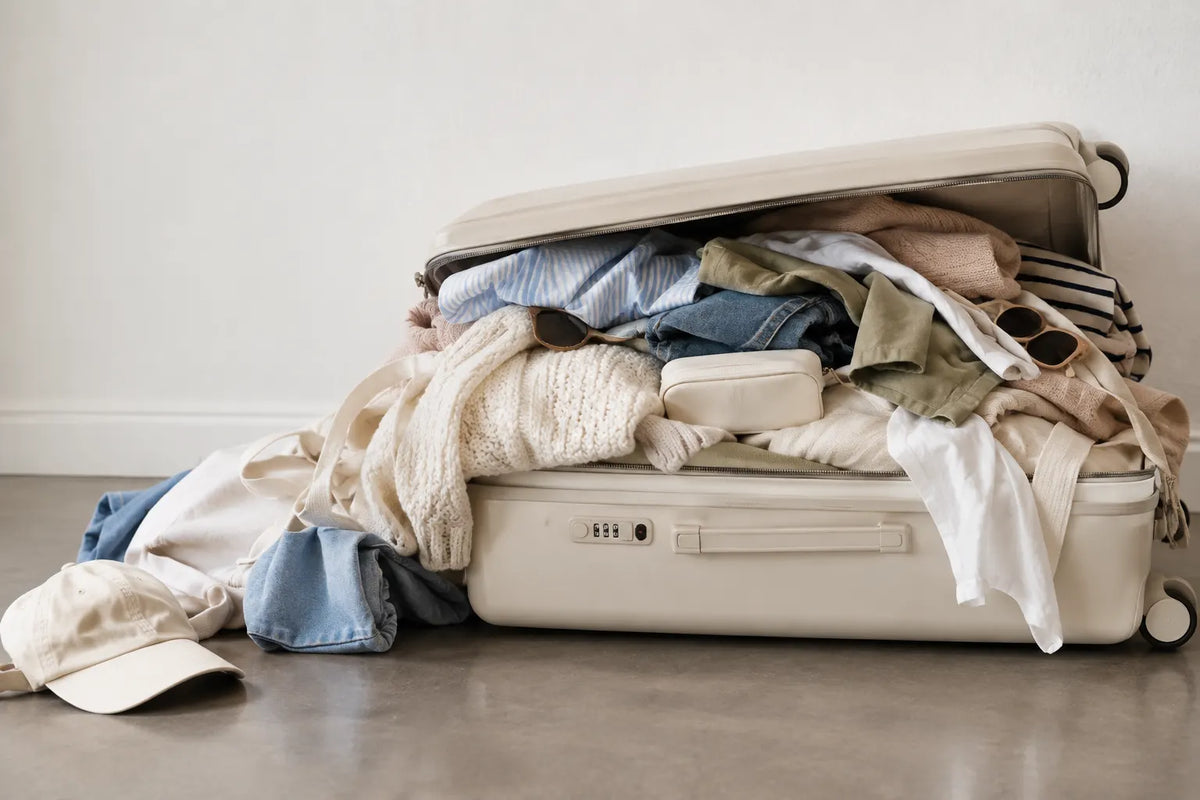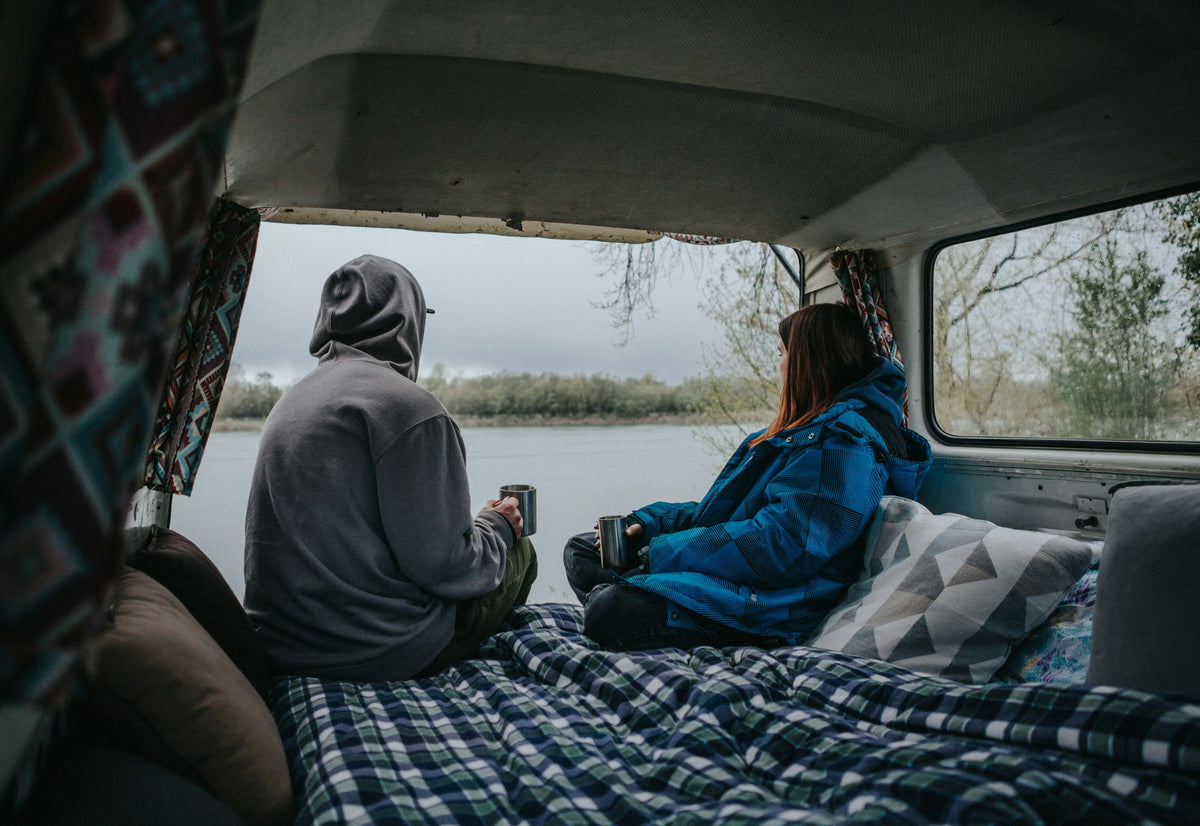
What’s horrible for me is packing for camping, specifically bulky items, irrespective of my love for adventures. I always blame my camping quilt for taking up a lot of space. It looked huge despite how tightly I folded it. Then the additional pillows, spare clothes, a hoodie and a towel ate up the rest of the space.
That issue was huge for me. I needed a solution, and I got it in the form of vacuum storage bags. I did not need to leave my quilt or pillow at home. I needed to reduce the air trapped inside those soft items. After trying the Misty-Style compression bags, I found a much easier way to pack bulky camping gear without changing what I wanted to take with me.
Why Does a Camping Quilt Take Up So Much Room?
A camping quilt feels light in your hands. The problem starts when you try to pack it. Its filling holds a lot of air, which gives the quilt its soft and fluffy shape. Folding it only changes the shape. It does not remove much of the air inside.
My pillow caused the same problem. It did not weigh much. It took up a surprising amount of space inside my bag. The available room disappears quickly when you add both items to clothes and other camping essentials.
This is where space saving bags make sense. Instead of trying to flatten a quilt with your hands, you remove the air inside the bag around it. The item takes up less volume while its actual weight stays the same.
That last point matters. Compression gives you more room. It does not make your quilt or pillow lighter. You still need to stay within your luggage weight limit.
What I Pack Into a Compression Bag Before Heading to Camp
I do not put every camping item into a compression bag. I use them for soft items that take up a lot of room and do not have sharp edges.
My usual list looks something like this:
- Camping quilt
- Suitable camping pillow
- Spare shirts
- Hoodie or fleece
- Sleepwear
- Soft towels
- Extra clothing
I also use a separate bag for clothes I have already worn. This small trick helps a lot on the way home. Clean clothes stay separate from dirty clothes, and I do not have to dig through my whole bag to find something fresh.
I would not put tent poles, cookware, tools, shoes with sharp edges, or other hard gear into the same bag. Sharp objects may damage the plastic. The bags are reusable, yet you have to keep them away from sharp objects.
For hiking trips, some people search for vacuum hiking bags with the idea of compressing every part of their kit. I prefer a simpler approach. I compress the soft, bulky items and keep the rest of my camping gear in its normal storage spaces.
How I Use Misty-Style Set to Compress My Quilt and Pillow
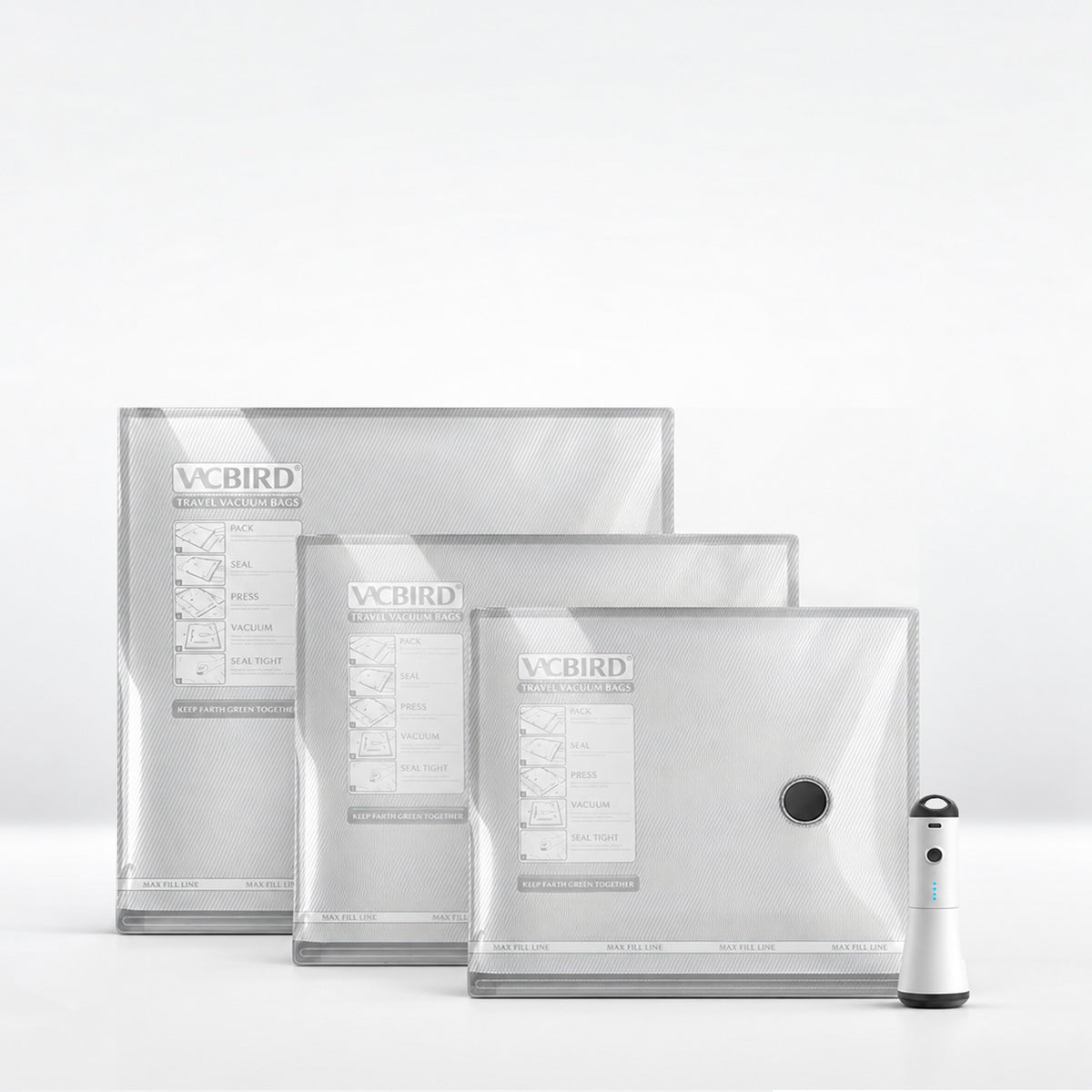
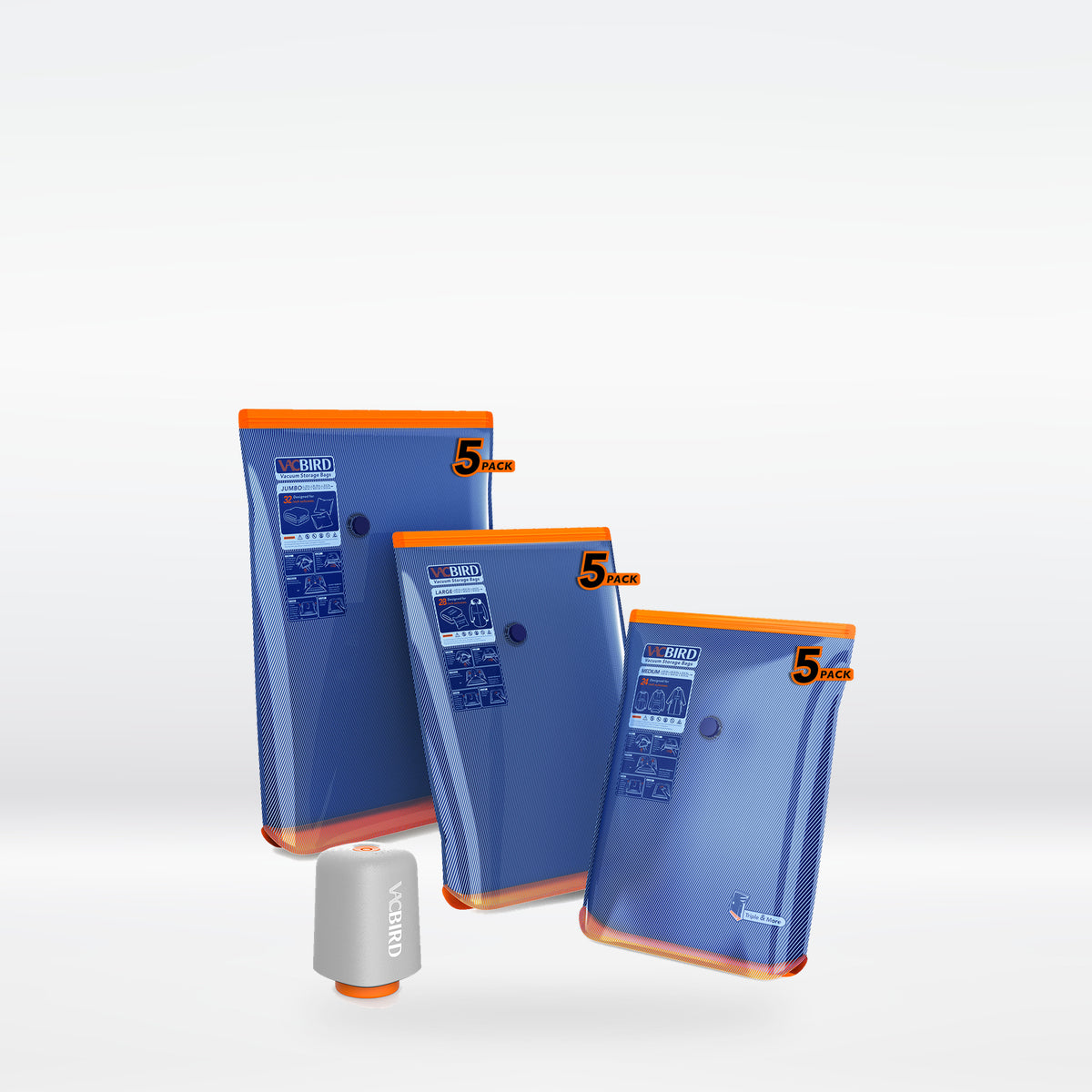
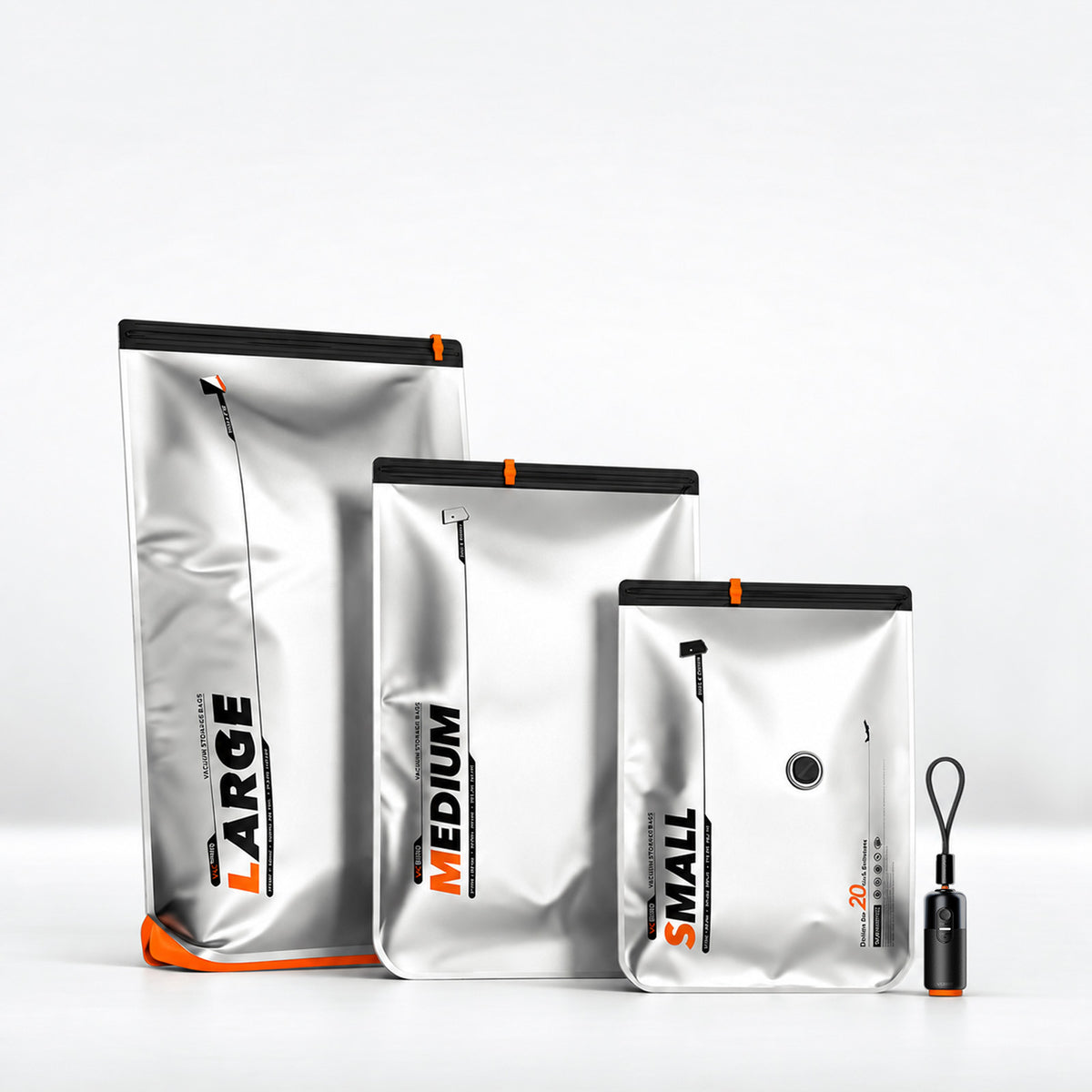
The part I like most about Misty-Style kit is that I do not need to press down on the quilt with my knees or use a hand pump. The kit uses a small rechargeable pump that removes the air with one press. The pump handles more than 100 compressions on one full charge, depending on bag size and use.
I Choose the Bag Size Before Filling It
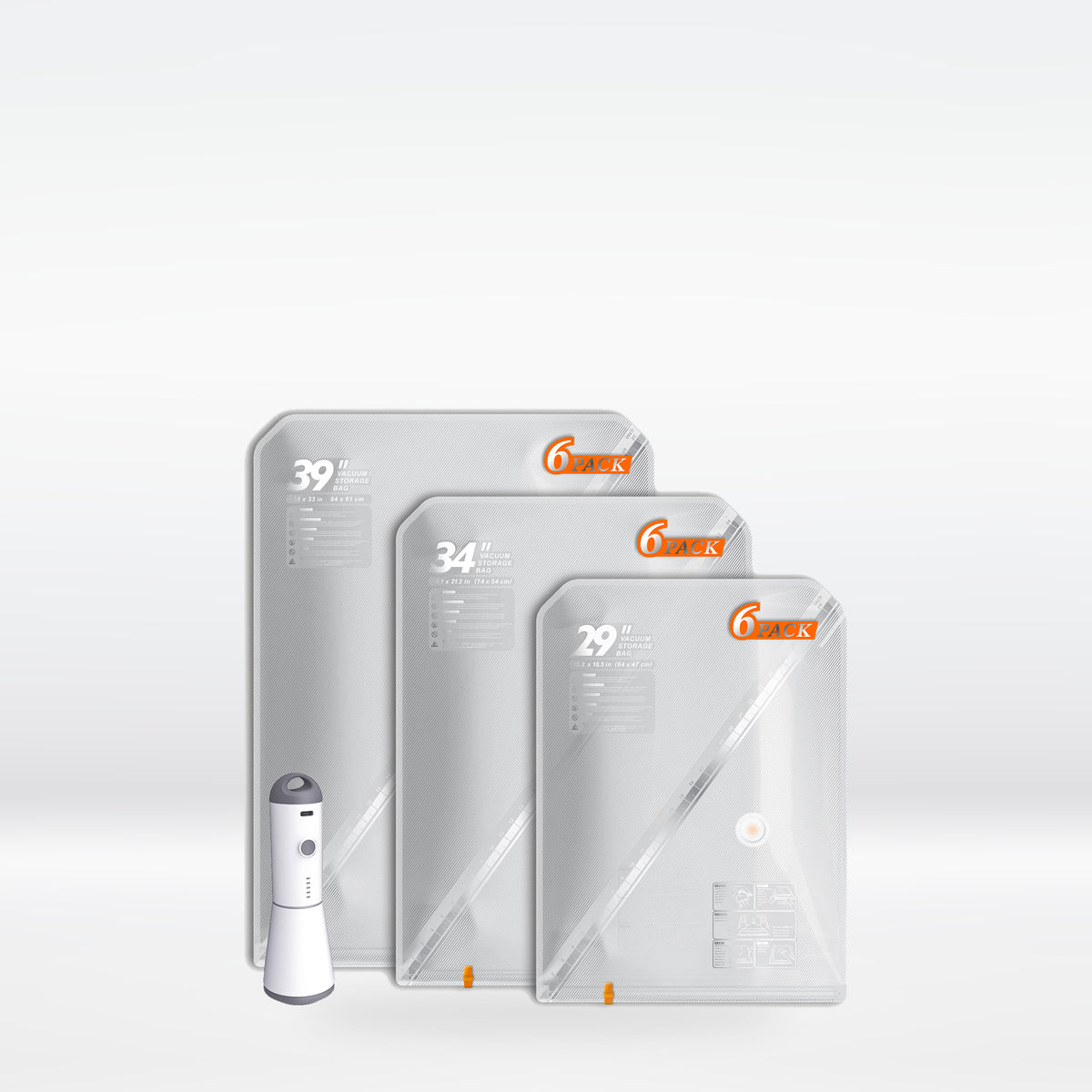
Misty-Style compression bags come in three marked sizes. The sets use 20 inch, 24 inch, and 28 inch bags. It’s a mixed set with different quantities of each size, which makes it easier to match the bag with your luggage.
I first look at the quilt and pillow together. A large quilt may need more room than a small sleeping pillow. I avoid stuffing too much into one bag because the goal is to remove air easily and keep the contents organized.
I Seal the Bag Before Starting the Pump
I place the dry quilt inside and leave enough room around the opening. Then I close the top seal properly. After that, I open the valve and place the Turbo X8 pump over it.
One press starts the suction and makes the bag begin to shrink as the air leaves it. Once I reach the size I want, I close the valve and check the seal.
Always make sure the seal closes fully before compression. The pump compresses the bag within around 10 to 20 seconds, depending on the bag and its contents.
I find this much easier than trying to push a fluffy quilt down by hand. The pump does the air removal, while I focus on packing the rest of my gear.
What Changes Once the Air Is Out?
This is the part I notice right away. My quilt stops acting like a large fluffy bundle and becomes a much flatter pack. That gives me more usable room around it.
My pillow also fits better once I remove the extra air. I no longer need to place it on top of everything else or give it a separate section in my luggage.
The semi-transparent design on Misty-Style bags helps too. I can see what I packed without opening several bags to find my sleepwear or spare shirt. Vacbird designed the bags with clear viewing areas and marked sizes for easier packing.
The rounded corners also help when I slide the compressed bags into luggage. The bags do not have awkward sharp corners that catch on the sides of my case.
That is why I see VacBird vacuum bags as part of my packing routine rather than just another storage item.
Can Vacuum Bags Help With More Than Just Packing Space?
Saving room remains my main reason for using them. After a few camping trips, I noticed several other benefits too.
Save Items from Dust and Dirt
You can’t put the camping gear in a clean closet after camping. A quilt may sit in a garage or storage area until the next outing. A sealed bag gives the fabric another barrier against dust and dirt.
Giving Moisture Less Chance to Reach My Gear
I pay close attention to moisture with camping bedding. I never seal a damp quilt or wet clothing. I dry everything properly first.
Vacbird bags have waterproof materials and airtight sealing that protect stored items against moisture, dust, odors, mold, mildew and insects. No outside water enters the bag. To keep items safe from mold, properly dry the damp item before storage.
Keeping Bugs Away From Stored Gear
Camping quilts and spare bedding may sit unused for weeks or months. A properly sealed bag gives those items another layer of protection against insects. The plastic is thick and strong, so bugs aren’t able to damage the surface.
Separating Dirty Clothes
This has become one of my favorite uses. I place dirty shirts and socks into a separate bag during the trip. Once I return home, I can take that bag straight to the laundry area.
It also helps when rain or mud becomes part of the trip. I keep wet gear separate until I have a chance to dry it properly.
Things I Avoid Putting Inside a Vacuum Bag
I learned quickly that compression bags work best for the right type of item. Soft clothing and suitable bedding make sense. Sharp equipment does not.
I also avoid putting damp clothing or a wet quilt inside a sealed bag. Moisture trapped inside a closed space creates a bigger problem later.
Some sleeping materials need extra care too. You may lightly compress leather, silk, wool, and down filled items for a short time.
I also check the care instructions for my quilt and pillow before compressing them. The simple rule I follow is this. Dry, soft gear goes in. Sharp or delicate gear stays out.
My Simple Camping Packing Setup With Misty
I now keep my camping packing system simple. I do not try to create one huge compressed bundle. Smaller groups make it easier to find things later.
My setup usually looks like this:
- Bag one: Camping quilt and soft sleeping gear
- Bag two: Pillow and sleepwear
- Bag three: Spare clothes and a hoodie
- Bag four: Dirty clothing for the trip home
The clear panels help me spot each group quickly. I also keep the small Turbo X8 pump with my travel gear. Its cordless design means I do not need to look for a power outlet before compressing a bag. It’s a rechargeable pump, and one full charge supports more than 100 compressions depending on conditions.
For anyone looking at vacuum travel bags, this setup also makes sense outside camping. The same method works for road trips, cabin stays, weekend trips, and longer holidays.
FAQs
Can I put a camping quilt in a vacuum bag?
Absolutely. A suitable camping quilt is good to go in a compression bag when the care instructions allow it. Make sure the quilt stays completely dry before sealing it.
Do vacuum bags make camping gear lighter?
No. They reduce the space your soft gear takes up. The quilt and pillow keep the same actual weight after compression.
Can I use the same bag for dirty clothes?
Yes. It's a good plan to use a separate bag for worn clothes when you are on your journey. You must clean the bag when needed and allow it to dry fully before using it again.
I Stopped Treating My Quilt and Pillow as Bulky Gear
My camping quilt and pillow still add weight in my bag. They just do not take over the whole bag anymore. That small change makes packing much easier.
Turbo X8 helps me remove the air that gives soft gear its bulky shape. The cordless pump makes the process quick, and the clear bags help me see what I packed. I also get a useful way to separate dirty clothes and keep camping bedding away from dust, dirt, moisture, and insects during storage.
When your camping quilt and pillow make your bag feel full before you even add your clothes, you should try compression before leaving those items at home. For me, it turned a frustrating packing problem into a simple part of getting ready for camp.