My traveling journey for over 15 years has had many ups and downs. It had a few mistakes that cost me energy and money, with a lot of mental stress. I'd dread lifting my heavy suitcase into the overhead bin when I showed up at the airport on my early trips. I love hiking and joining fancy dinners, so it was always a yes to carry related clothes. I was also packing for every possible scenario, so my bag had a few warm clothes for rainy and snowy weather, even during traveling in summer. Irrespective of all efforts, I was always ending up wearing the same three things anyway.
My habits were firm, but caused problems with mental stress. I realized that I need to change them for my easy traveling trips. A ruthlessly edited packing list with a compression system that actually works for travelers was a savior there for me.
I am covering both things in this guide to show you exactly what I pack and how I pack it. The biggest help in my compression strategy is the Turbo X7 vacuum pump from Vacbird, which is perfect for fitting more into less space.
Let's get started.
Why Most Packing Advice Falls Short
Before we dive into the list and the compression strategy, I need to be honest about something.
For years, I followed all the standard advice. I rolled my clothes instead of folding them. I bought expensive packing cubes. I wore my bulkiest items on the plane. And sure, these things helped. But they never solved the real problem.
The real problem is air.
Clothes have layers, and they trap air that causes fluff. A winter jacket is 90% air. Sweaters also have fluff. It isn’t apparent, but the t-shirt fibers also trap air between them, which is just rearranged when you roll and fold the cloth. Our real aim is to remove that hidden air, which is possible with compression. It actually removes the air. And until recently, compression for travelers meant either:
- Manual pumps that took forever and wore out your hands
- Electric pumps that required a wall outlet
Neither worked well on the road.
Then I found the Turbo X7 from Vacbird, and suddenly, compression made sense for travel. The secret is its cordless and rechargeable system.
My Minimalist Packing Philosophy
My previous trips to 30 countries were the best because of my minimalist packing strategy. The three rules that I developed always guided how I pack, and I am sharing them here for your help.
- The first rule is simple but results in a big impact. Do you know the length of your trip? No big deal. Pack one week worth of clothes. If you run short of clothes, just do laundry halfway through. You have enough stuff to wear over and over the same item while managing laundry. I promise you won't miss the extras.
- I now pick items carefully. You call me a picky person. I only pack items that serve more than one purpose. My quick-dry pants work for hiking and city walking. Sometimes they help me when I'm having nice dinners. My scarf works as a blanket on cold planes. My phone is my camera and map with a little entertainment.
- The things you buy at your destination places are nothing worthy to take with you. It’s just extra luggage. You don’t need to carry your full house with you. Toiletries and sunscreen are available everywhere, so why should you bring them with you? They just add weight and take up space that's enough for your souvenirs. But remember, if you are going for a short trip of 3 to 4 days long, keep them with you because at that moment you might carry less clothing.
The Complete Minimalist Packing List
The items and the quantity of each aren't specific. I carry the following stuff mostly for places with temperatures from 45 to 85 degrees Fahrenheit. I make small adjustments at the end for colder or hotter weather.
Clothing
|
Item |
Quantity |
Why It Works |
|
Merino wool t-shirts |
3 |
No smell Dry fast Feel good |
|
Quick-dry pants |
1 |
Wear them on the plane Hike in them Dress them up |
|
Quick-dry shorts |
1 |
Double as swim trunks |
|
Boxer briefs |
3 |
Quick-dry fabric Wash in sink |
|
Wool socks |
3 |
Don't stink Warm even when wet |
|
Long-sleeve base layer |
1 |
Sleep in it Layer under jacket |
|
Lightweight down jacket |
1 |
Warm without bulk after compression |
|
Rain shell |
1 |
Packs into its own pocket |
|
Wool buff or scarf |
1 |
Neck warmer Hat Blindfold Blanket |
|
Beanie |
1 |
Cold mornings Bad hair days |
Shoes
Shoes are the hardest part of packing light. I always wear the bulkiest pair on the plane and pack at most one extra pair. I prefer to stuff socks and underwear inside the shoes to use dead space and even put my charger in it.
I usually wear trail runners that work for hiking and city walking. If I need something dressier, I pack lightweight canvas sneakers.
Toiletries
Liquids are big trouble makers with their leakage problem and airport restrictions. That makes me switch almost entirely to solids.
- Toothpaste tablets
- Shampoo bar
- Deodorant stick
- Sunscreen stick
- Minimal first aid (blister pads, pain reliever and bandages)
Everything fits in a small hanging kit.
Electronics
That’s a must, and I can’t ignore this section. Phone is non-negotiable, but I might consider an e-reader or tablet a good optional gadget to carry. Just put one universal adapter with 2 USB ports and a power bank in your bag. Have a small space left? Adjust 1-foot charging cables (short means no tangles)
Documents
Unskippable portion. Must carry
- Passport
- Two credit cards (keep them separate)
- Printed copies of reservations
- Digital copies in Google Drive
Cold Weather and Hot Weather Adjustments
I said earlier that I make small adjustments in items according to hot and cold weather. What are those adjustments? Check them out.
Cold Weather (Below 45°F / 7°C)
Add or swap these items:
- Swap 2 midweight socks for 2 heavyweight socks for more warmth
- Swap down vest for down jacket for more coverage
- Add lightweight gloves to tuck into jacket pockets
- Put a second long sleeve shirt for extra layering
Hot Weather (Above 80°F / 30°C)
Add or swap these items:
- Swap 2 midweight socks for 2 no show socks for cooler feet
- Add a second pair of shorts for more rotation
- Pack sandals if needed to easily walk on the beach and showers
I still pack long sleeves and pants for bugs and sun protection even in hot weather.
Why Compression Changed How I Pack
For years, I accepted that my bag would be full. I'd stuff everything in, sit on it to close it, and call it good.
Then I tried compression bags for a trip to Iceland in January.
I needed to pack for cold weather—down jacket, fleece, base layers, heavy socks. Normally, that gear would fill half my bag by itself. With compression, all of it fit in the bottom corner.
That trip brought the main change in my traveling life.
What to Look For in Travel Compression Bags
Not all compression bags work for travel. Here's what matters:
- No heavy equipment needed. You can't carry heavy tools for compression in your bag.
- Reusable seal is important, as one-time use bags are useless for travel.
- Bags get tossed around, so never compromise on durable material.
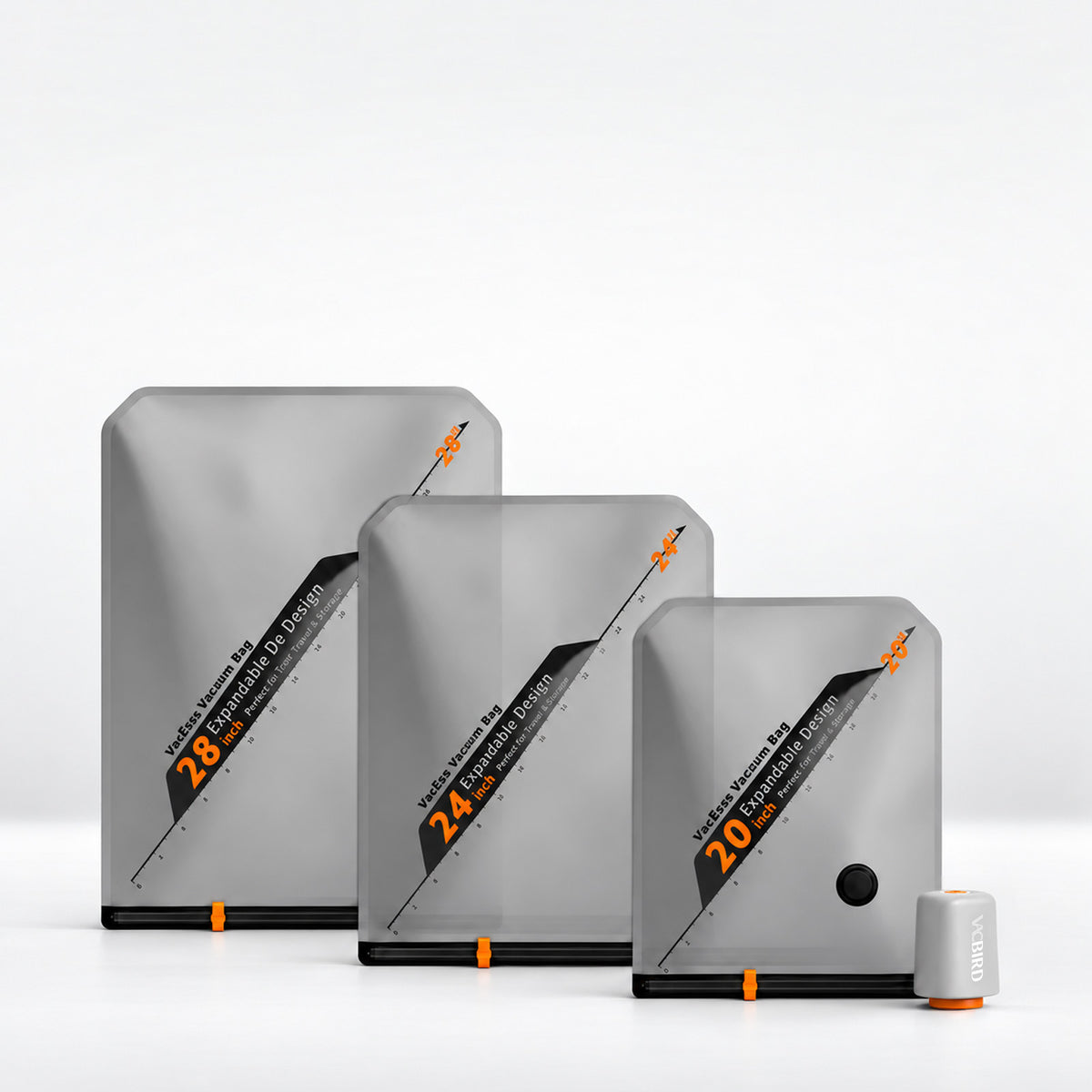
- Different items need different bags, so pick a package with multiple sizes of bags.
- A set of vacuum storage solutions that comes with a compact pump. If it's bulky, you won't bring it. A lightweight one, specifically the cordless, rechargeable, is unmatchable for traveling.
Most bags fail on at least one of these. The Turbo X7 from Vacbird gets them all right.
Meet the Turbo X7: A Travel Compression System That Works
I tested several compression systems before landing on the Turbo X7. Here's why it's the one I actually use.
The Pump
The Turbo X7 pump is actually the differencer bringer in this system. It's cordless and rechargeable, which never asks you to find an outlet. The pump is small enough to fit in your palm and it's fast.
|
Feature |
What It Means |
|
4000Pa suction |
Strong enough to compress thick fabrics |
|
140L/min airflow |
Each bag takes 10-15 seconds |
|
1500mAh battery |
Compresses up to 90 bags per charge |
|
USB charging |
Charge from laptop, power bank, or wall outlet |
I've used mine for months on one charge. I plug it into the same power bank I use for my phone when it needs power.
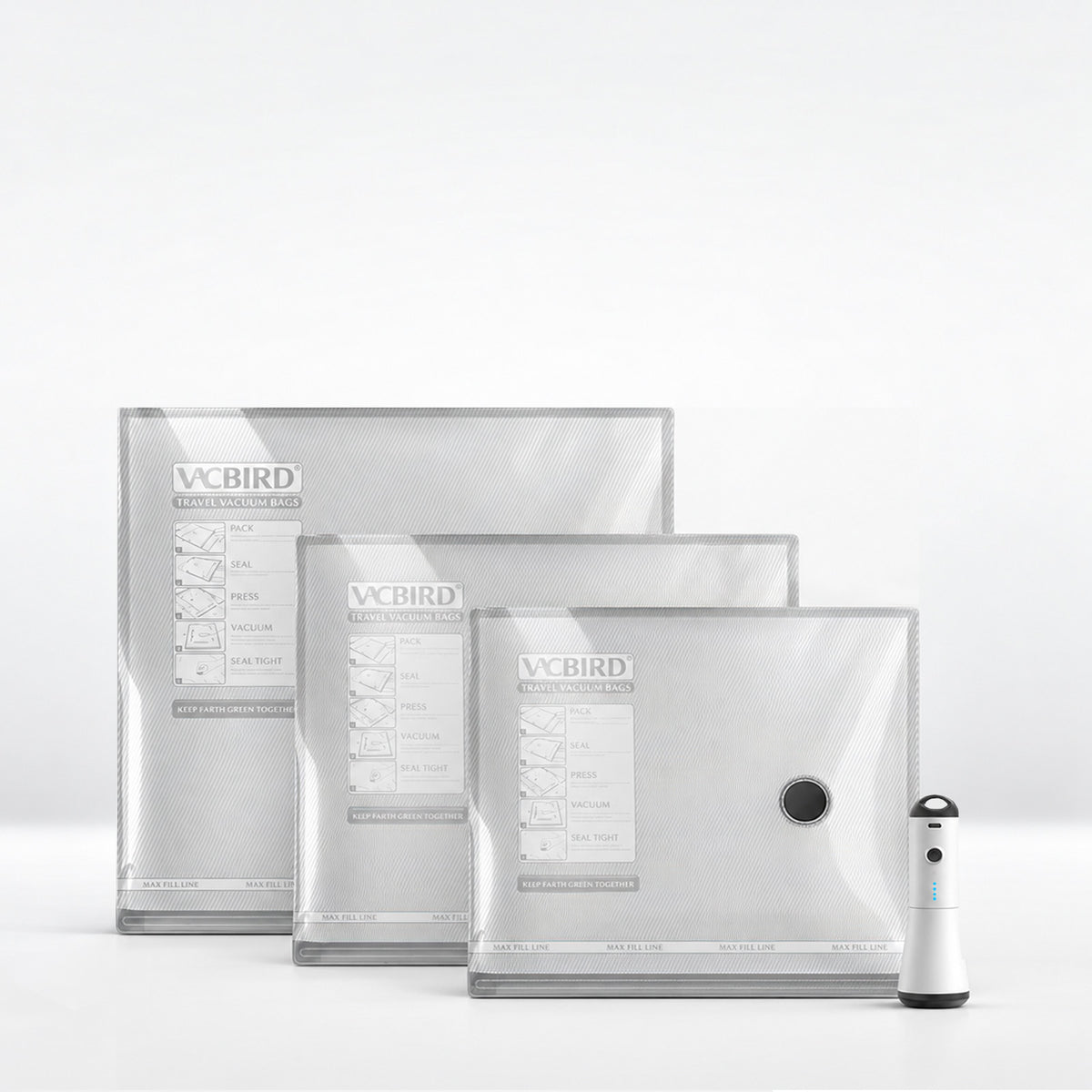
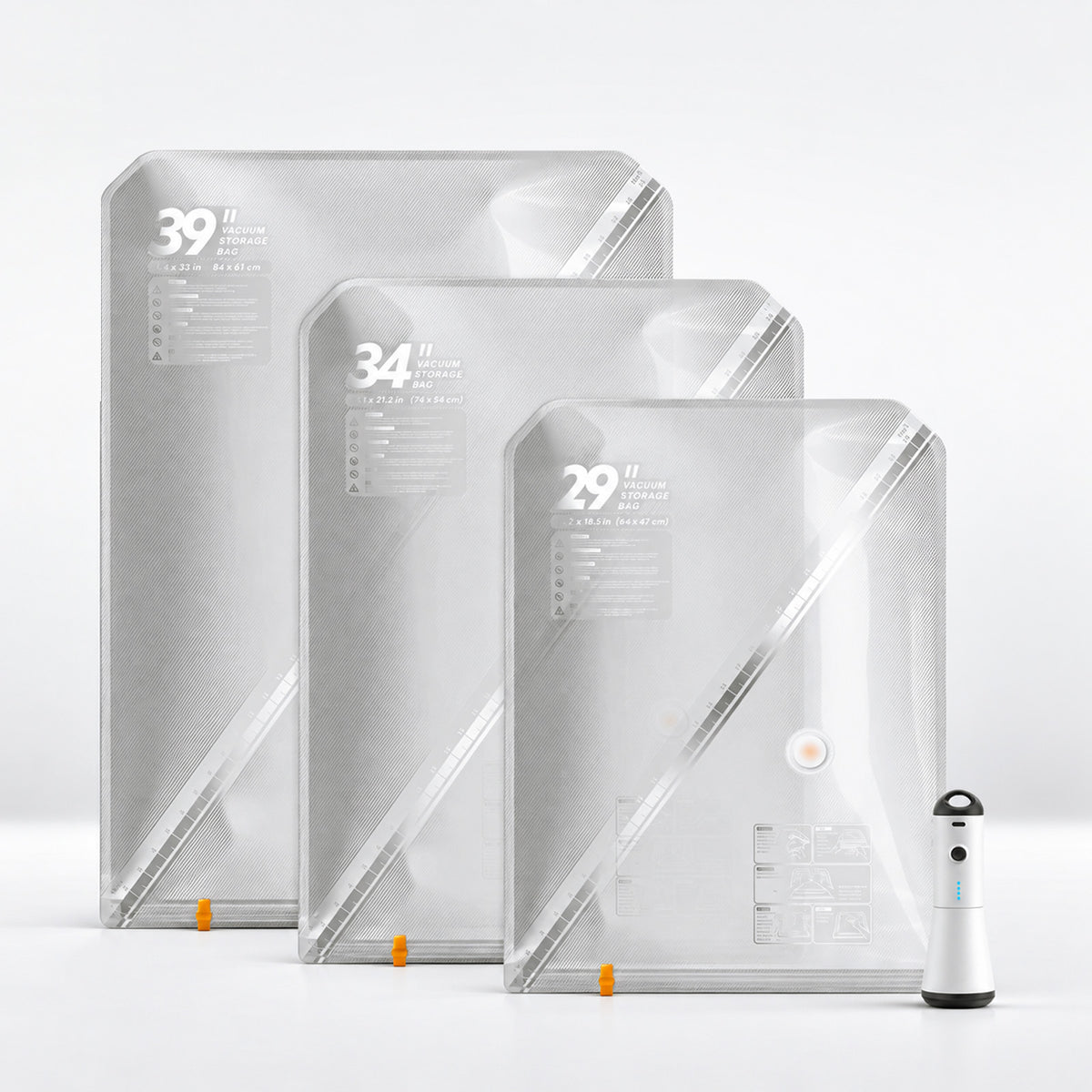
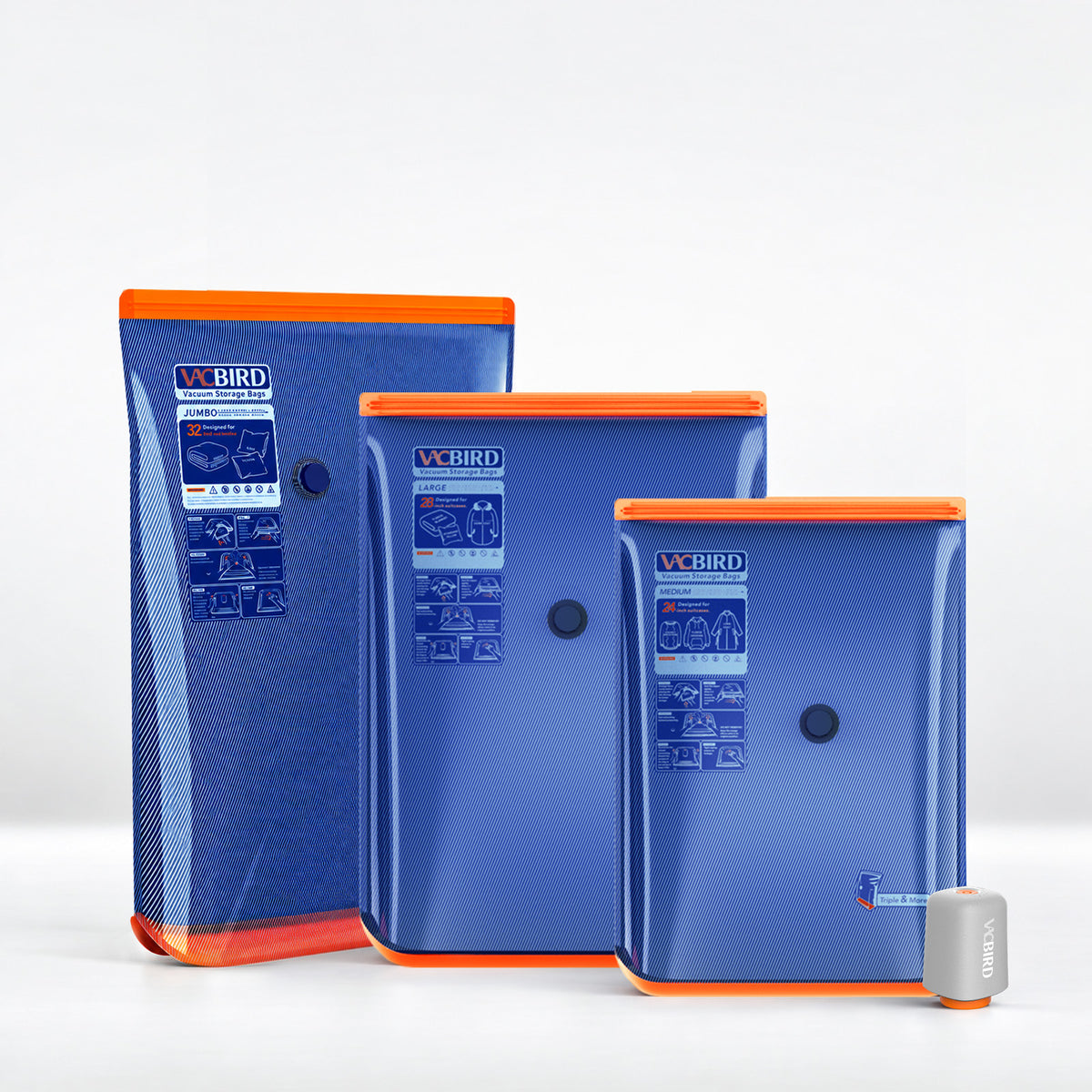
The bags are semi transparent to give me a clear idea of what's inside without opening them. The dual-zipper design makes sealing much easier than single-zipper bags. And the PA+PE material is thick enough to survive repeated trips.
My Step-by-Step Compression Packing Method
Here's exactly how I pack using the Turbo X7 system.
Step 1: Sort Clothes by Bag Size
I make three piles:
- Small bag items like shirts and socks with base layers
- Medium bag items like pants and shorts
- Large bag items like heavy jackets and hoodies, lighter jackets and multiple layers
Step 2: Load the Bags
I fold items rather than roll them, which creates rectangular bricks that stack neatly. I leave about two inches of space at the top so the seal works properly.
I stack socks and underwear type short items flat. For pants, I fold them once lengthwise.
Step 3: Seal Each Bag
The dual-zipper design makes this easy. I start at one end and pinch both zippers together, then run them across the opening. Hearing a click sound means it's sealed.
I always run my fingers across the seal to check. It should feel flat and smooth.
Step 4: Open the Valve
The compressor bags have valves with a white cap. Remove the white cap and put it somewhere safe because you will need it within a few seconds.
Step 5: Start Compressing with the Turbo X7
I attach the pump to the valve. It fits snugly with no issues and creates no leakage. I press the power button and watch the bag shrink within 10 to 15 seconds. I remove the pump when the air stops flowing.
Step 6: Seal the Valve
This step is critical and technical to understand. VacBird bags have a red silicone flap, which usually prevents the bag from re-inflating right away. It holds the vacuum long enough for you to put the cap on. The screw on cap is the secondary seal. Just tightly close it as if it is loose or cross-threaded; air can slowly seep past the silicone flap over time.
Step 7: Stack and Pack
Now I have neat bricks of compressed clothes. I pack them in this order:
- Bottom of bag (against my back if using a backpack): Large compressed bags
- Middle: Medium compressed bags, shoes with socks inside
- Top and outer pockets: Small compressed bags, toiletries, electronics, rain jacket
How Compression System with Turbo X7 Helped Me in 10 Days in Iceland
My last trip to Iceland was in January, a place with a temperature of 20°F to 40°F. I needed serious cold weather gear. This means there is too much trapped air between layers. So, I picked the Turbo X7 that time to pack all my clothing.
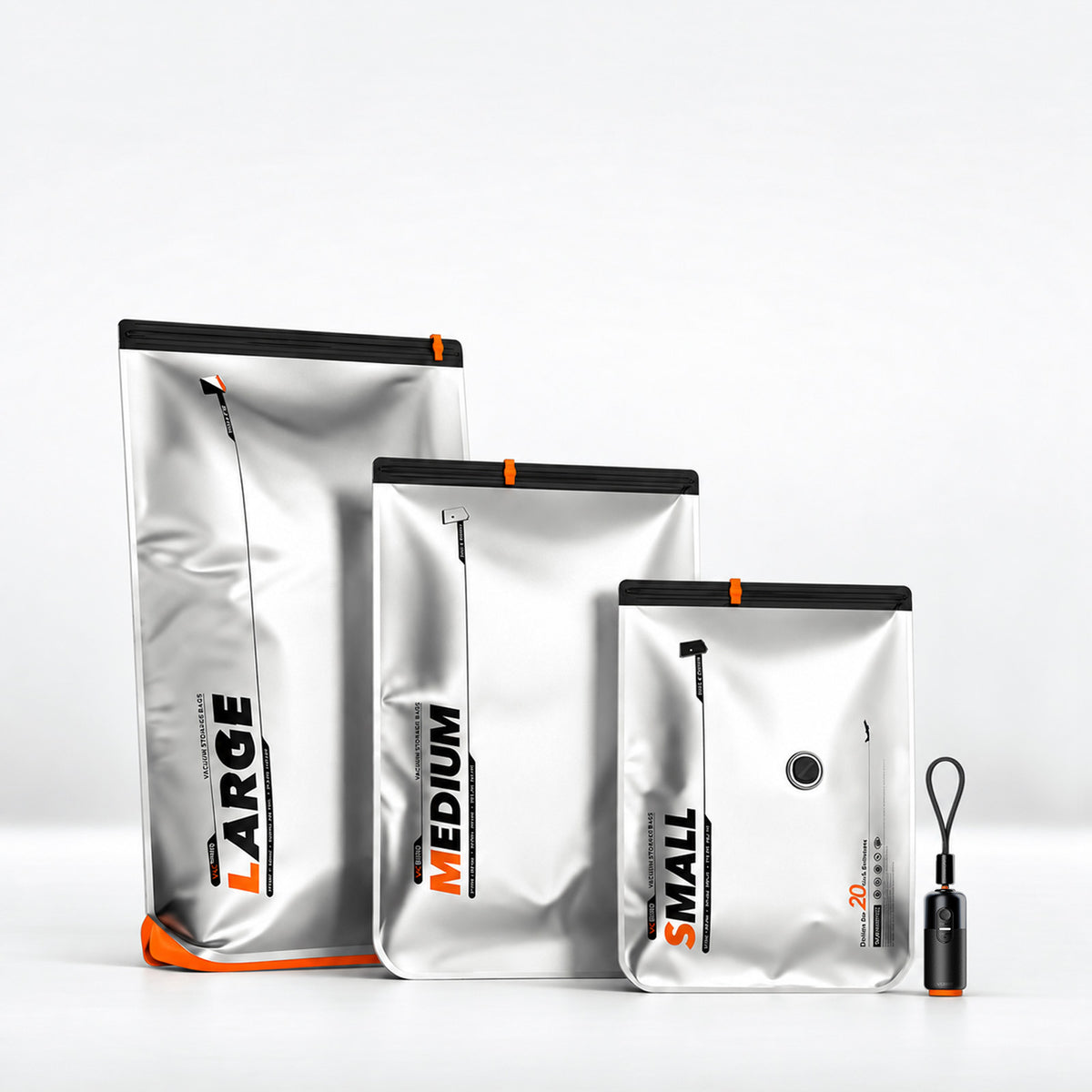
Small Vacuum Storage Bag Contains
- 3 merino t-shirts
- 3 boxer briefs
- 1 long-sleeve base layer
- 3 wool socks
Medium VacBird Vacuum Bag contains
- 1 pair quick-dry pants
- 1 pair of shorts
Large vacuum Storage Bag carry
- 1 down jacket
- 1 fleece jacket
Worn the rain shell or put it in your outer pocket.
Everything compressed fit in the bottom third of my 35-liter backpack. I had room for my camera and toiletries, laptop and souvenirs.
Taking Care of Your Turbo X7
The Turbo X7 isn't disposable. I bought my set a few years back, and after that, I don't feel any need to buy a new one. Take care of your vacuum set to keep it working for many years.
Pump Care
- Charge via USB when the battery gets low. A full charge takes a couple of hours and lasts for 90+ bags.
- Store the pump in a dry place. Its compact size makes it fit anywhere.
- Take a dry cloth to clean it when you feel it's dirty. Don't use water directly, as you know it's an electronic device.
Bag Care
- Bags have a plastic material. Cleaning with a damp cloth is the right thing to do. Then air dry them completely before storing.
- Lint and debris settle on the zipper track. Run your fingers along the zipper to reset it if it feels loose.
- Caps close when the bags aren't in use. Check the rubber O-ring now and then for debris.
- Stack flatly or loosely roll your bags before storing. Never store them compressed—it stresses the seals over time.
Common Problems and Fixes
|
Problem |
Likely Cause |
Fix |
|
Air comes back after compression |
Cap not tight enough |
Tighten cap, remove and reseat if needed |
|
Pump won't attach |
Valve cap still on |
Remove cap before attaching |
|
Compression is slow |
Low battery |
Charge the pump |
|
Bag won't stay sealed |
Debris in zipper |
Clean zipper, reseal |
FAQs
1. Do compression bags actually work?
Yes. I was skeptical, just like anyone. I first used the VacBird Turbo X7. It shrank my down jacket to the size of a water bottle. Properly cared vacuum bag keeps the items compressed for as long as 6 months to a year.
2. How much space does a vacuum storage bag save?
In my experience, the Turbo X7 reduces clothing volume by about 80%. A down jacket that normally takes up half a backpack becomes the size of a paperback book. Three pairs of pants compress into a brick the size of a water bottle.
3. How many compression bags should I pack?
Three bags are enough. A small one for socks and underwear. One medium for t-shirts. One large for jackets. That covers me for two weeks. The 9-combo set gives you three of each size, which is plenty.
Conclusion
How to pack less and travel better? I struggled with this question for years, and then found my minimalist list and compression strategy, which is the result of countless trips and plenty of mistakes. Founding the Turbo X7 is the best thing that has happened to me in my travel life.
My advice is only to pack wisely, put all your necessary stuff in compression bags, pack them correctly, and enjoy your stress-free travel.
Try this system on your next trip. Pack the list I gave you. Use the Turbo X7 to compress your clothes. You'll surely like it.