I used to vacuum seal clothes until I learned the hard way that going too tight causes real damage. I would suck every bit of air out until my bags turned into rock hard bricks. The satisfaction was real. But when I opened those bags months later, my clothes told a different story.
Deep creases that wouldn't iron out. Flattened sweaters that lost their shape. A puffer jacket that never fluffed back up no matter how much I shook it. That jacket was ruined. I learned my lesson the expensive way.
Then I discovered the “20% air” trick from fabric nerds and storage pros who actually know what they are talking about. Vacuum sealing is not about removing all air. It is about controlled compression that saves space without wrecking your clothes. Once I started leaving a little air in the bag, everything changed. My clothes came out looking just like they went in.
So, if you don’t know about the 20% air trick, this blog is for you.
Why Most People Over-Tighten Vacuum Bags Without Realizing the Damage
That’s the first question that came to my mind, and I got my answer from my own mistake. We, humans, love to go to extremes. When we read the product description “Fully compressed clothes to save up to 80% space,” we only think that this claim works when we remove 100% of the air from the bag. Let’s understand everything in detail.
The “Rock Hard Bag” Mistake
We all love watching a vacuum bag shrink down to nothing. That visual proof of space savings feels amazing. The smaller the bag gets, the more satisfied we feel. People think tighter equals better storage. This assumption is completely wrong.
What Actually Happens to Fabric Under Extreme Compression
When you remove all air and turn the bag into a dense block, you apply constant heavy pressure on every fiber of your clothes. This pressure does not let up for months. Natural fabrics break down under this stress. The structure of the fabric changes permanently.
The compression also causes fabric fatigue. Fibers get pressed so hard that they lose their elasticity. Some materials never fully recover. The vacuum bag that seemed like such a smart solution ends up destroying your favorite clothes.
The Hidden Fabric Damage Nobody Talks About
Although the issue lies in ‘no proper storage strategy,’ it’s still important that you are familiar with the issues you may experience with vacuum storage bags. So, when you know the damage and its reason, you are able to avoid it and safely use vacuum storage bags for ultimate benefits.
Deep Wrinkles That Don't Go Away
Sucking out all the air from a vacuum bag puts heavy pressure on clothes. Even strong fabrics start forming deep crease lines. These lines stay locked inside the material for a long time.
Silk and satin type delicate fabrics suffer the most. Formal clothes often come out with sharp fold marks that do not smooth out easily with ironing.
When vacuum storage bags get too tight, fabric fibers stay pressed in one position for months. That pressure changes how the fabric rests. Some wrinkles turn very hard to fix after that.
This is also why VacBird suggests keeping some air inside the bag and not fully compressing delicate clothes during storage.
Loss of Loft in Jackets and Comforters
Puffy jackets and down comforters have trapped air inside their fabric for insulation. Vacuum sealing removes that trapped air. It presses the filling tightly together. The feathers lose their natural space and get flattened over time.
After opening storage, many people notice the same problem. The item feels thin and less warm compared to before. Full recovery does not always happen, especially after long compression.
I noticed this with a sleeping bag I stored for several months. It stayed tightly packed the whole time. When I opened it later, the material felt less full, and the warmth level dropped.
This is one reason controlled compression matters more than full vacuum sealing for sensitive items.
If you have the same problem, you can also check how to safely flatten down jackets after vacuum sealing in this guide.
Compression Fatigue in Natural Fibers
Wool and cotton fibers have natural spring. This elasticity gives clothes their shape and comfort. Strong compression puts constant pressure on these fibers during storage. Over time, the fibers lose their natural bounce and feel less flexible.
This change affects comfort and structure. Clothes do not return to their original shape as easily after long vacuum storage.
How Tight Should You Vacuum Seal? Understanding the “20% Air” Rule
The 20 percent air rule stays simple. Stop vacuuming before the bag turns into a hard block. Keep around 20% of the air volume inside the bag.
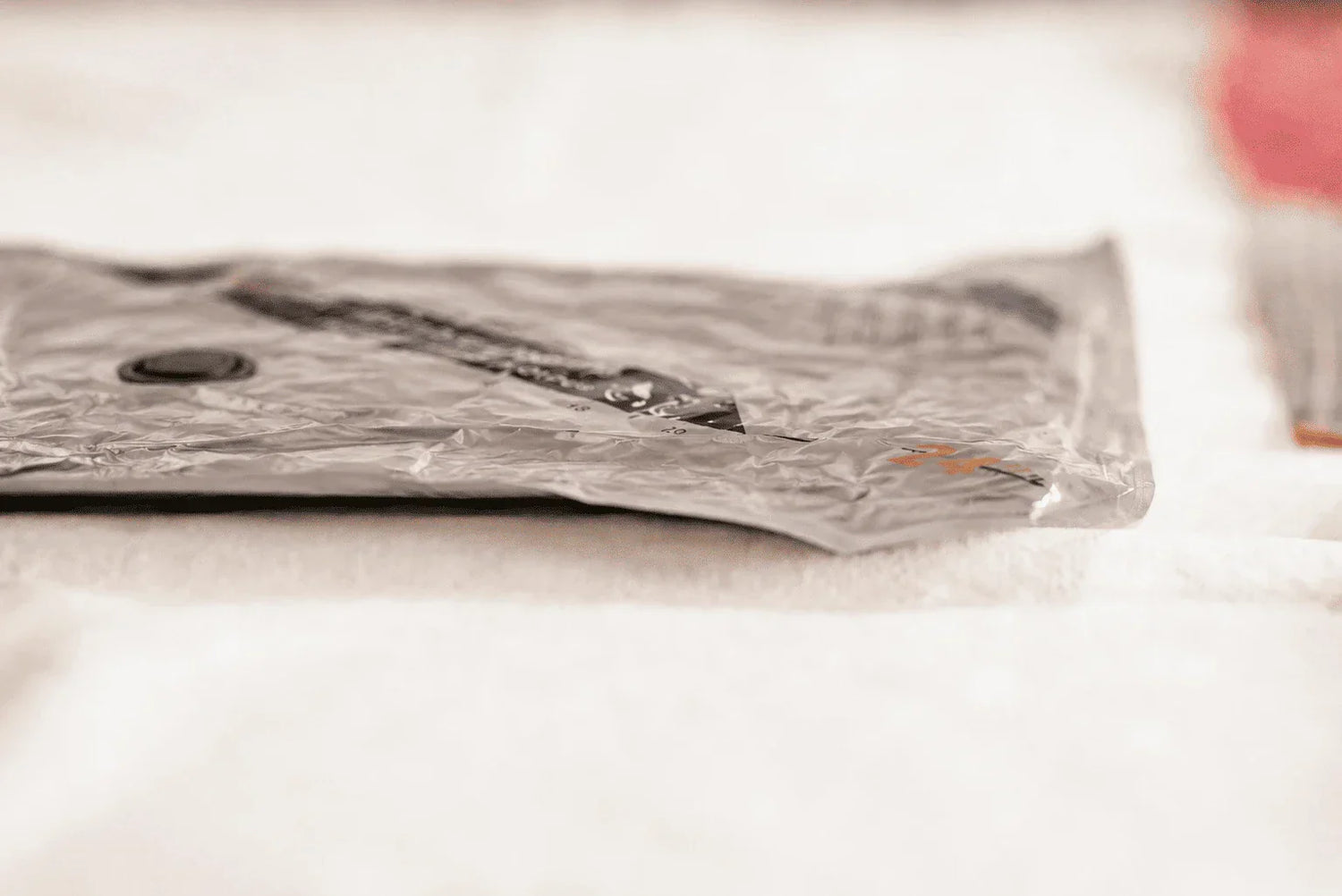
The bag should feel firm under touch. It should not feel like a solid plastic brick. Think more like a firm mattress instead of a concrete slab.
When pressed, a slight softness should remain inside the bag. That small air space works like a cushion between clothes and the plastic surface.
This cushion reduces direct pressure on fabric. Clothes stay separated instead of getting crushed tightly together. This helps protect the shape during long storage.
Why 20% Air Protects Your Clothes
This leftover air reduces pressure points across your clothes. It prevents fiber crushing and maintains the garment shape. The bag still saves you about 75 to 80 percent of space. You get nearly the same storage benefit without the fabric trauma.
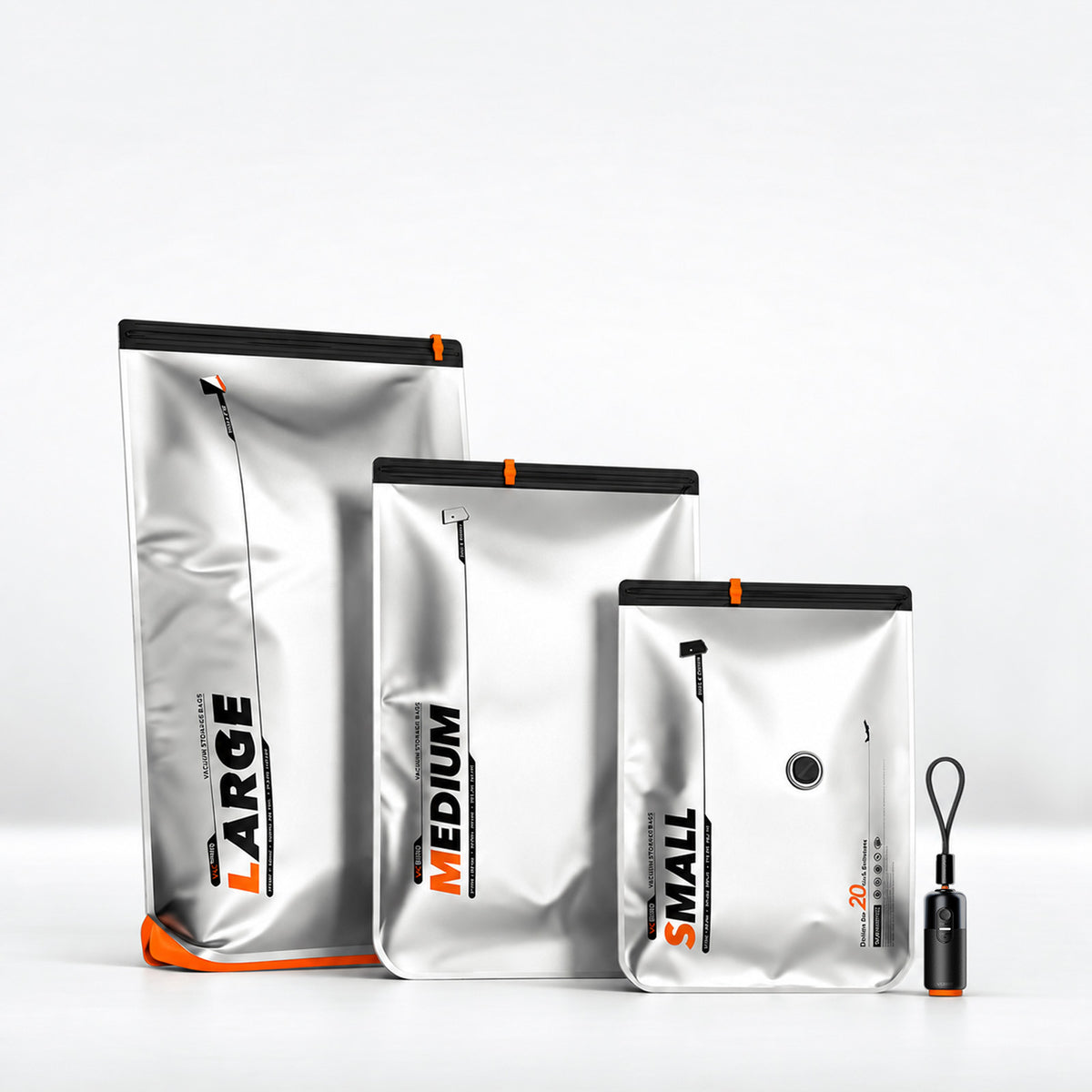
The compression effect becomes uniform rather than violent. VacBird vacuum storage bags make this easier because the material is thick PA+PE plastic that compresses evenly. The bag does not stretch or stress unevenly.
The Sweet Spot Between Compression and Protection
Getting the balance right takes practice. Too loose and you waste space. Too tight and you damage fabrics. Balanced compression gives you vacuum packing style that actually works for long-term storage.
The sweet spot happens when the bag feels firm to the touch but still has flexibility. You can press it and feel the air cushion inside. This is where the bag protects your clothes while still saving space.
Which Clothes Are Safe for Vacuum Storage Bags
Here is the list of items that you vacuum compress easily with no fear, and those one also which you loosely compress as they need air to stay healthy.
Best Fabrics for 100% Vacuum Compression
These clothes handle pressure well:
- Cotton shirts
- Denim jeans
- Polyester blends
- Towels
- Bedsheets
- Curtains
These items are ideal for use in 100% vacuum compression.
Fabrics You Should Never Fully Compress
Some fabrics need space to stay healthy:
- Silk clothing
- Cashmere sweaters
- Leather items
- Wool for long storage
- Down jackets
- Formal embroidered clothes
These lose shape under heavy pressure.
How to Vacuum Seal a Bag Without Ruining Your Clothes
- Wash and dry everything first. This is non negotiable. Any moisture creates odor and fabric damage inside a sealed space.
- Flat folds reduce crease lines. Rolling gives softer marks than tight folding.
- Place clothes gently inside a vacuum bag and avoid overstuffing. Leave space near the zipper line.
- Seal the zipper carefully. Run your fingers along the double-zip seal multiple times to ensure it is airtight. A tiny gap ruins everything.
- Attach your pump to the pressure valve. The small and handy VacBird electric pump is USB-powered and perfect for home and travel needs. Apply the 20% rule here. Stop the pump when the bag feels firm but still has slight give.
- VacBird bags have a one-way valve, which means air has space to move out but not to move inside.
Do Vacuum Storage Bags Actually Work or Cause Damage
Many people ask, "Does vacuum storage damage clothes?” It depends on your packing strategy. Let’s see.
When They Work Perfectly
Vacuum bags work well in these cases:
- Seasonal clothing storage
- Travel packing
- Moving homes
- Closet organization
These use cases show the real value of vacuum sealer bags for packing.
When They Fail
Problems appear when usage goes wrong:
- Cheap material leaks air
- Over compression damages fabric
- Poor sealing allows air return
- Moist clothes create odor
The correct method matters more than the product alone.
The Role of Quality Vacuum Bags in Preventing Fabric Damage
Yes, the quality of vacuum bags also matters in saving your clothes from damage. The more the high quality bag is, the better you prevent fabric damage.
Why Bag Quality Matters More Than Technique Alone
Good technique only works with quality bags. Cheap bags have weak seals that leak air. Thin plastic offers uneven compression and punctures easily.
Quality bags have strong seal strength. The plastic thickness protects your clothes. Air retention stability keeps the vacuum intact.
Why VacBird Vacuum Storage Bags Make a Difference
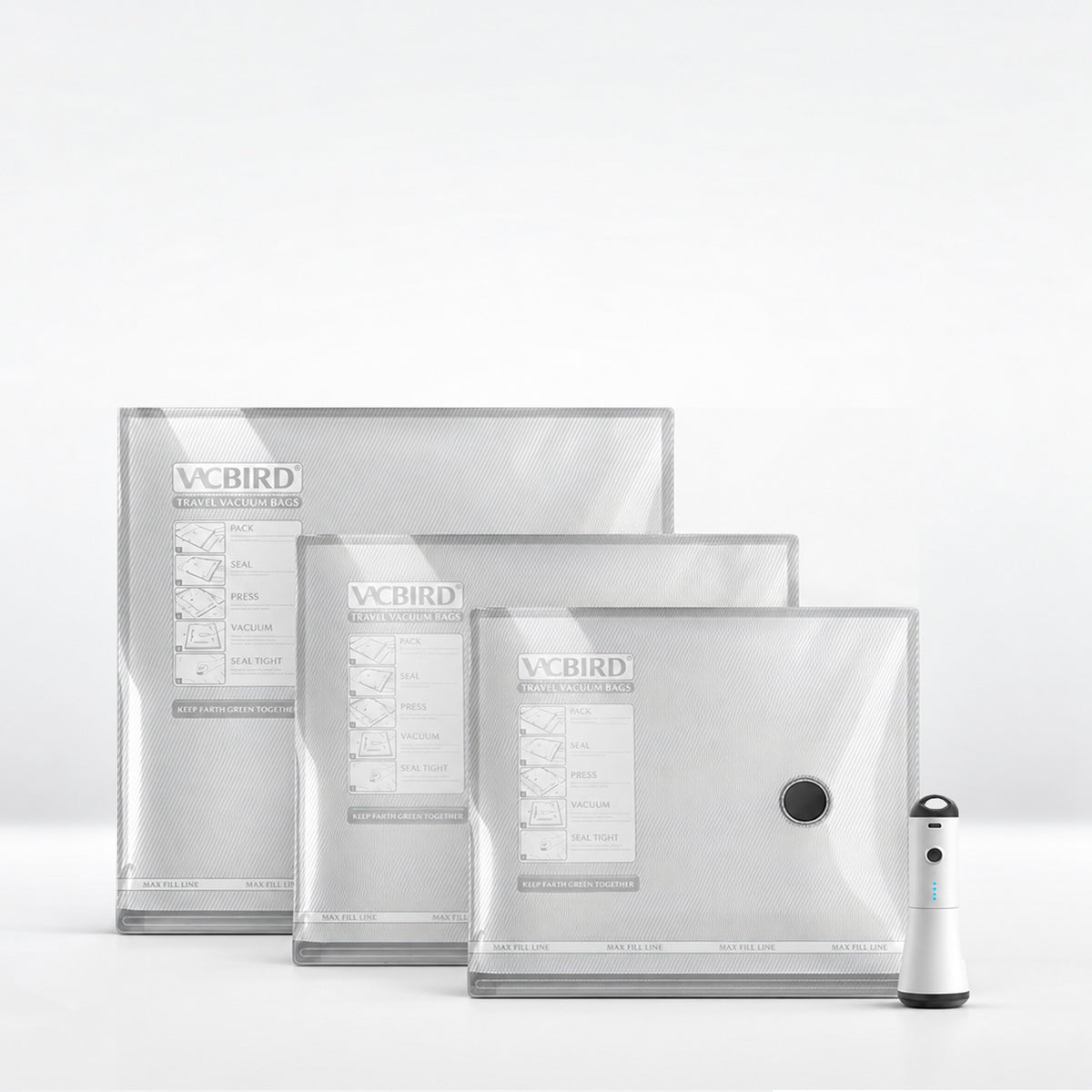
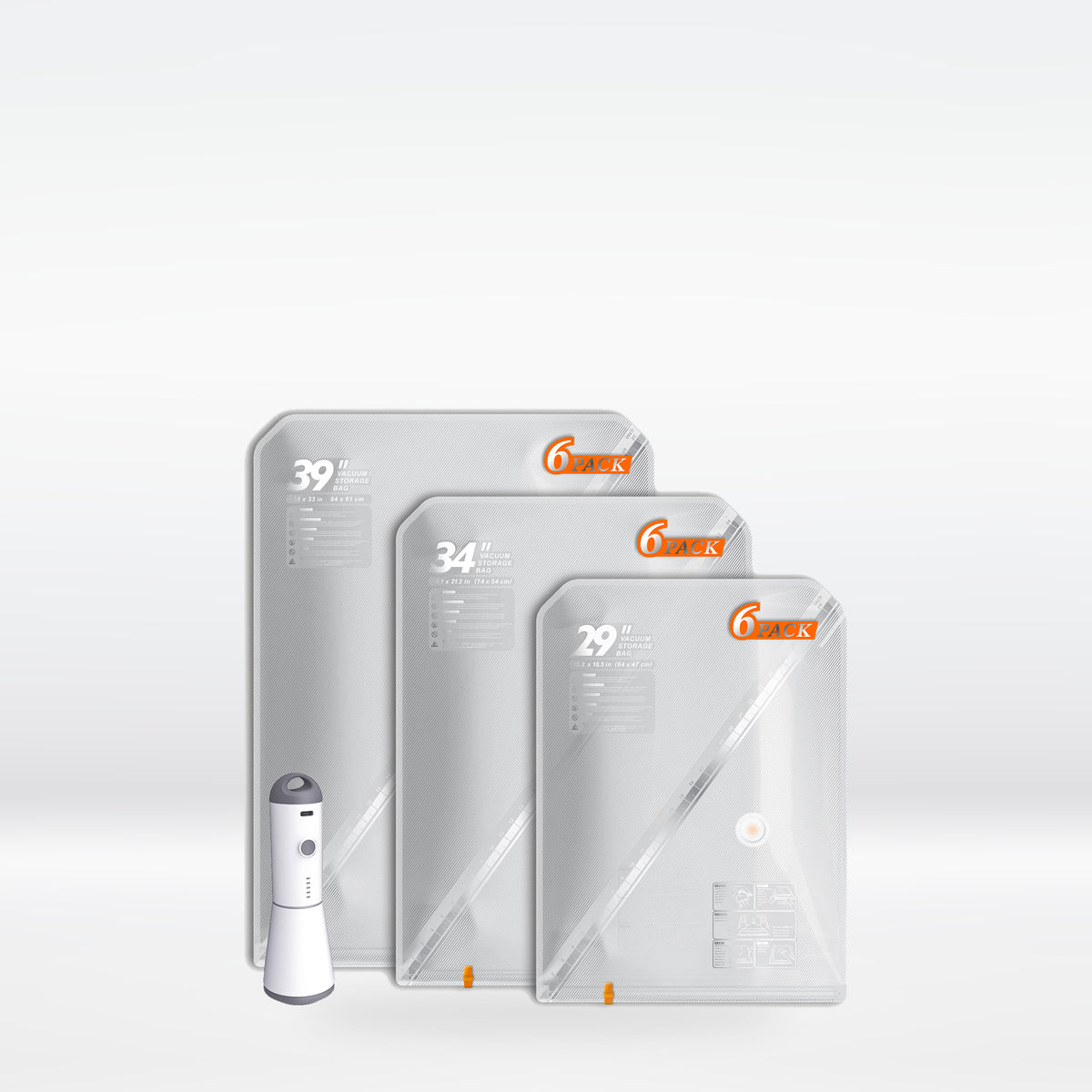
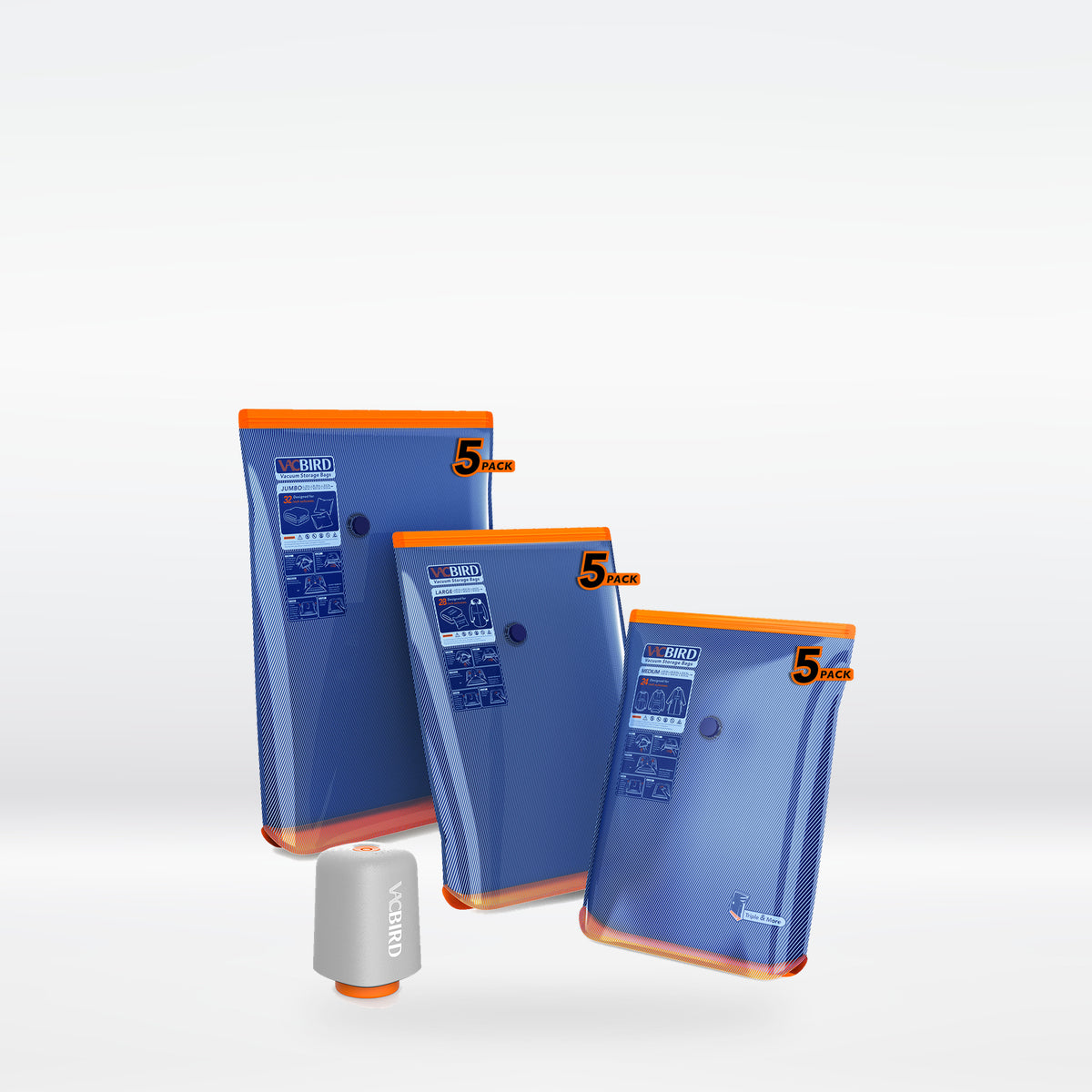
VacBird vacuum storage bags use durable PA+PE material construction. This material is tear-resistant and reusable. The strong airtight seal system prevents leaks. The controlled compression supports the 20% air trick perfectly.
The double-zip design ensures the seal stays closed. The thick plastic protects your clothes from punctures. It doesn’t allow dust and bugs to enter your clothes and ruin them. Even the moisture doesn’t find any place to move inside the bag after compression and offers mold prevention. They are reusable bags and work for many years if you store them properly and safely. So, overall, it reduces waste also.
VacBird Pumps and Controlled Compression Advantage
VacBird bags and pumps work together for better results. The USB-powered pump offers convenience for home and travel. It helps you stop at the correct compression level. You can control the vacuum instead of overdoing it.
The pump prevents accidental over-vacuuming. You watch the bag compress and stop when you hit the 20% sweet spot. This controlled approach keeps your clothes safe while maximizing space savings.
Are Vacuum Storage Bags Just “Space Bags” or Something More
Many people call them space bags due to the strong compression effect. In reality, vacuum bags do more than save space.
- They protect from dust that settles on stored clothes.
- They stop moths and other pests from damaging fabrics.
- Properly resist moisture to prevent mold growth.
- Airtight sealing helps clothes to retain their freshness. They come out smelling clean instead of musty.
This protection matters for long-term storage.
Maintenance Tip
Reopen your bag every few months. Let your clothes breathe for a day. Repack if needed. This simple maintenance keeps your clothes healthy during long storage periods.
FAQ
Is it okay to vacuum seal clothes for a long time?
Yes. Open the bags periodically if you need to store them longer.
Should I fold clothes before vacuum sealing?
Yes. Fold neatly to prevent deep wrinkles. Rolling works even better for wrinkle prevention. Avoid cramming clothes in there. Proper folding prevents creases and seal failures.
Do any vacuum storage bags actually work?
Yes, but quality matters. Look for thick PA+PE plastic with a reliable double-zip seal. Cheap bags leak air and ruin your efforts. Quality bags stay airtight for months.
How to get air out of vacuum storage bags?
Vacuum storage bags come with vacuum pumps, both electric with a cord and USB powered rechargeable pumps. Pick a quality one which are small in size but efficient in work, like VacBird vacuum pumps.
What is the best brand of vacuum storage bags?
The best brand of vacuum storage bags is one that prioritizes quality. VacBird offers bags made of thick, tear resistant material with reliable seals. The electric pumps are compact and easy to use. The double-zip design ensures airtight storage.
Conclusion
Vacuum storage helps in space saving by compressing the clothes. Problems may start when you fully remove the air to get a hard brick appearance.
The 20 percent air trick gives a balance between safety and storage and helps clothes keep their shape better and last longer.
Remember to follow good techniques, but with quality bags and pumps. Smart compression protects clothes and keeps storage simple for daily life.