


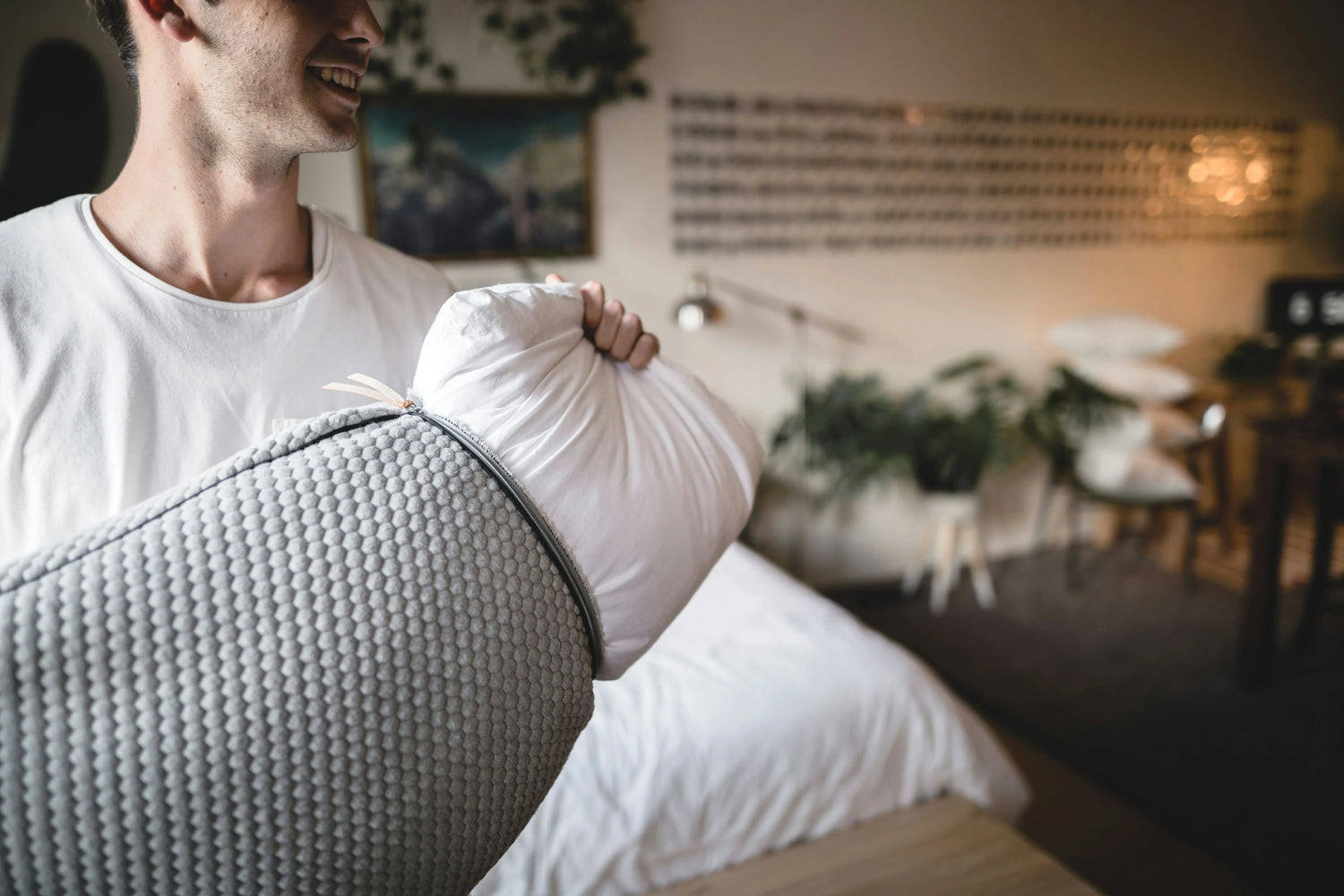
Latex pillows almost always bounce back after vacuum compression. They actually need 24 to 48 hours to reach full loft. Memory foam recovers more slowly, specifically when you compress it for weeks at a time. Storage length matters more than the compression itself.
My hall closet lost a war with four pillows last spring. A friend told me to put them in vacuum storage bags and stop overthinking it. I wanted to. One worry stopped me. What happens when I open the bag again? Nobody wants to trade closet space for a flat, lifeless pillow. I tested it myself with a latex pillow, a memory foam pillow, and a cheap polyester one. The results surprised me, and they are not the same for every pillow you own. So, let’s read it.
My Experiment with Vacuum Compressing Pillows
I started with the pillow I cared about least. My old polyester pillow went into a medium bag, I ran the pump, and it shrank to the size of a paperback. Two weeks later, I shook it out, and it looked normal within an hour.
Confidence made me bolder. Next, I sealed my natural latex pillow and my memory foam pillow for three weeks. The latex puffed up while I watched. It hit roughly eighty percent of its shape in ten minutes and looked normal by the next evening. The memory foam came out like a squashed brick with a crease down the middle. That crease relaxed over two days, though the pillow never matched its old feel.
Understanding the Science Behind the Bounce
It’s inappropriate to blame anything without proper knowledge and without finding the root cause.
What Makes Latex Pillows Different
Natural latex comes from the sap of the rubber tree, with the name Hevea brasiliensis. Makers whip that sap into foam and cure it. This leaves an open cell structure full of connected air pockets. Air moves through those cells freely, and that single fact explains how latex behaves in a bag.
Latex is buoyant and responsive. You press it, you let go, it snaps back. My pillow springs back the second I lift my head, with no lag at all. The foam industry calls that rebound resilience, and latex scores high on it.
High resilience also means the material resists compression set, which is the permanent loss of thickness after long pressure. Vacuum compression only removes air, and once air rushes in, the structure pulls itself open again.
The Memory Foam: Is There Any Risk With It
Memory foam is a viscoelastic polyurethane foam. NASA developed it in the 1960s for aircraft seat cushioning. The sleep industry took it over decades later. The material reacts to heat and pressure, and it moves slowly on purpose. That slow motion creates the contouring hug people buy it for.
Slow recovery cuts both ways. I have owned memory foam pillows that took three to five seconds to rise after I pulled my hand away. Normal for a viscoelastic material. It also means the foam never fights compression the way latex does. Memory foam cells have thin walls, and some walls stay folded after a long squeeze. That is cell collapse, and no amount of fluffing brings those cells back.
The Truth About Vacuum Compression and Bounce Back
Here we found the truth.
The Latex Pillow Verdict
Latex pillows bounce back well. My testing matched what latex mattress makers say about roll packed products, which travel compressed and recover on arrival.
The Memory Foam Reality Check
Memory foam is a different thing. Foam density decides the outcome, and most people have no idea what density their pillow uses. Dense foam copes. Cheap, low density foam does not.
My first attempt used a generic bag. The pillow had re-inflated inside the bag within two days. The seal had failed completely, and the pillow sat in a plastic sack collecting moisture. Weak bags cause more pillow damage than the vacuum ever does.
The pattern from my tests looks like this.
- Polyester and down recover fast.
- Latex recovers well with patience.
- Memory foam recovers sometimes, and the risk grows every week you leave it flat.
Will Your Pillow Survive Vacuum Storage Bags
Let’s find out if there is any way to store your pillows in vacuum bags safely.
Vacuum bags perform exceptionally well in both short-term compression and long-term storage. Seasonal changes, moving, travel, or guest room linens that are used only twice a year and need to be stored long-term.
- Latex. Safe with good technique and a reliable seal.
- Down and polyester. The easiest wins. Both recover quickly.
- Memory foam. Vacuum compress it only for a few weeks.
Use the one week test. Open the bag, fluff the pillow, and give it seven days. A pillow that still shows a dead flat zone after a week has permanent damage.
Long Term Compression Risks
Latex pillows last roughly five to eight years with normal use. If you go for repeated deep compression, it shortens their life more. Memory foam already runs a shorter clock at three to five years, so compression eats into a lifespan that was never long.
One insight beats every technique. A quality bag with a strong seal changes the result. A leaky bag refills with humid air, and the humid air inside the foam grows mold. My worst outcomes all traced back to bad bags rather than bad pillows.
How to Properly Vacuum Seal Your Pillows
Here is the actual part. Let’s find the safest method.
My Step-by-Step Success Method
- Wash and dry the pillow completely. Damp foam inside space saving bags turns into a mold problem you will smell for months. I give pillows a full day of air drying first.
- Fold evenly. One fold along the natural centerline. Random scrunching creates stress points, and stress points become creases.
- Match the bag to the pillow. Leave two inches of clearance. A cramped bag never seals properly.
- Use an electric pump. Even suction beats a hand pump every time. Press down on the bag while it runs.
- Stop a little early. Leave a small cushion of air. Total flatness looks impressive and recovers worse.
The VacBird Solution for Safe Pillow Compression
I switched to VacBird bags after my seal failure, and my results changed.
Material That Holds
VacBird uses a PA+PE material across the range. Polyethylene forms the airtight layer. The bag holds air out once you remove it, rather than breathing it back in.
The Seal
The double zip seal with a sliding clip creates a closure that generic bags fumble. I get far fewer seal failures now, and pillow storage lives or dies on that seal.
Pumps and Sizes
The range covers USB powered pumps and cordless rechargeable options at VacBird. Sizes run from mini pouches up to large 28 inch and 39 inch bedding bags, so you can size the bag to the pillow instead of forcing a fit.
When NOT to Use Vacuum Compression for Pillows
- Memory foam pillows are older than two or three years. They already sit near the end of their life.
- Anything you plan to leave sealed for many months. Still, you use vacuum storage bags without compression with proper sealing. It doesn’t help with space saving, but it helps save your pillows from bugs, dust, and moisture in the rainy season. If you store completely dry pillows, you can also avoid mold growth.
Pro Tips for Maximum Bounce Back Success
- Fluff and shake hard. Agitation reopens folded cells faster than time alone.
- Give the pillow one to two days in a dry, ventilated room.
- Warm rooms help. Memory foam softens with heat and recovers faster at 70 degrees than at 60.
- Choose medium firm pillows. They hold their structure better than very soft ones.
- Never over compress. That last bit of air is your friend.
FAQs
Will a latex pillow bounce back after vacuum sealing?
Yes. The latex material recovers well due to its open cell structure and natural elasticity. Maybe your pillows need 24 to 48 hours to reach their original shape, so open the bag within 72 hours and allow the pillows to air out.
What happens to memory foam in vacuum storage bags?
Results vary. Some memory foam pillows reinflate fully within days. Others lose support permanently once the foam cells collapse. Long storage raises the risk sharply. It's better to avoid sealing memory foam for months at a time.
How long does it take for a compressed pillow to bounce back?
You have to wait for 24 to 48 hours with latex pillows. Higher quality latex recovers faster. It sometimes takes a few hours. It's better to wait the full two days before you sleep on it.
Are vacuum storage bags safe for pillow storage?
Yes, for the right pillows. Synthetic and down fills handle compression easily. Memory foam remains a mixed bag and depends on foam quality and storage time. A reliable seal prevents the leaks and moisture that ruin pillows.
Conclusion
The real answer refuses to be a clean yes or no. Latex bounces back and rewards patience. Memory foam asks you to risk a pillow to save a shelf, and that trade rarely pays.
After years of trial and error, I have learned that not every pillow belongs in a bag. For the ones that do, the space savings feel incredible. Choose the pillow wisely, keep storage short, and put your money into quality vacuum storage bags rather than the cheapest pack on the shelf.

Dejar un comentario
Este sitio está protegido por hCaptcha y se aplican la Política de privacidad de hCaptcha y los Términos del servicio.